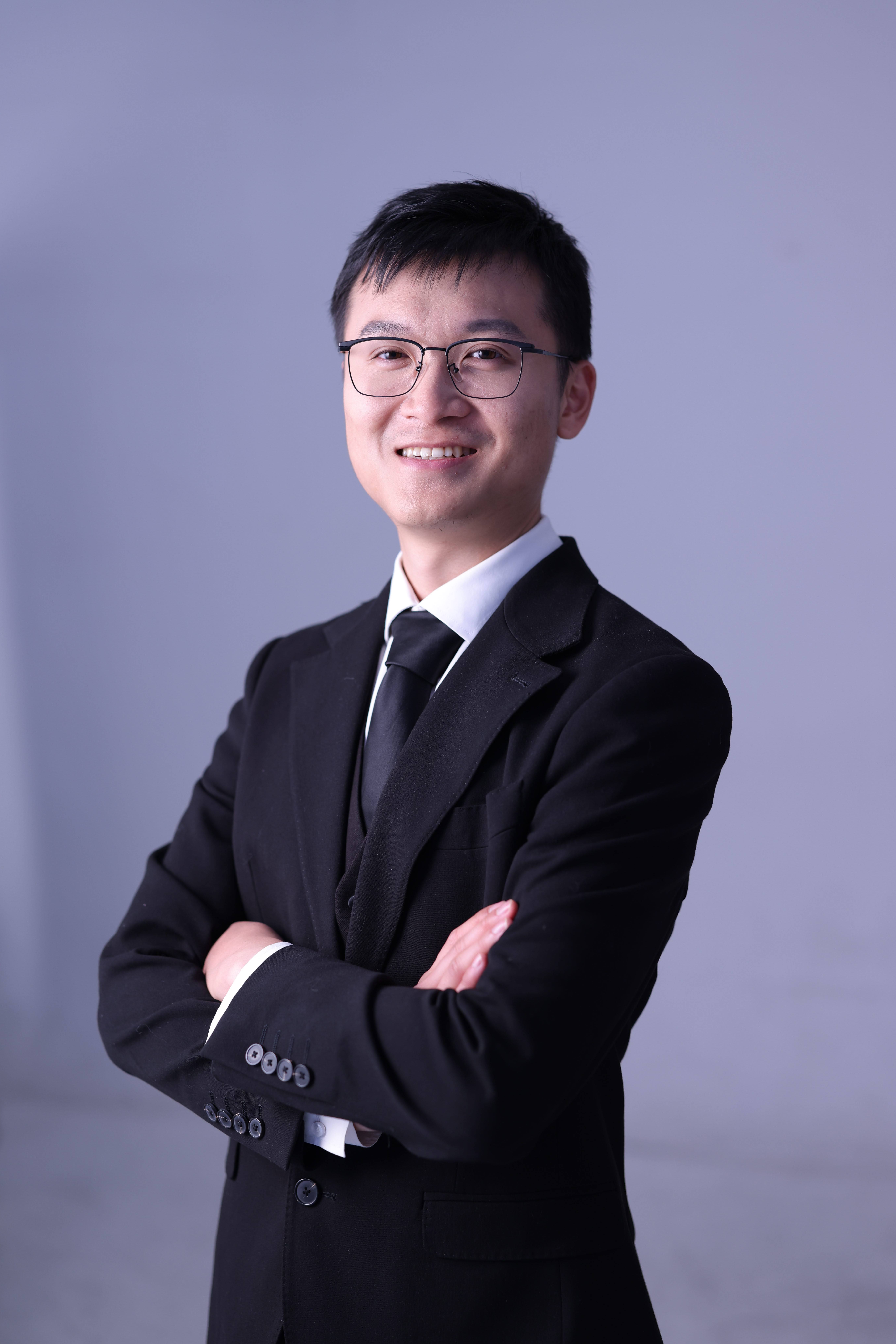
韦淳于,博士,硕士生导师。中国人民大学信息学院讲师,中国人民大学国家治理大数据和人工智能创新平台研究员。

2019年于清华大学自动化系获学士学位,2024年于清华大学自动化系获博士学位。以第一或通讯作者发表CCF-A类论文二十余篇,研究成果在腾讯、阿里和快手等公司落地。入选中国人工智能学会第二届“清源学者”,北京市“高创计划”青年人才托举工程。

🔬 研究领域:关系智能 (Relational Intelligence)

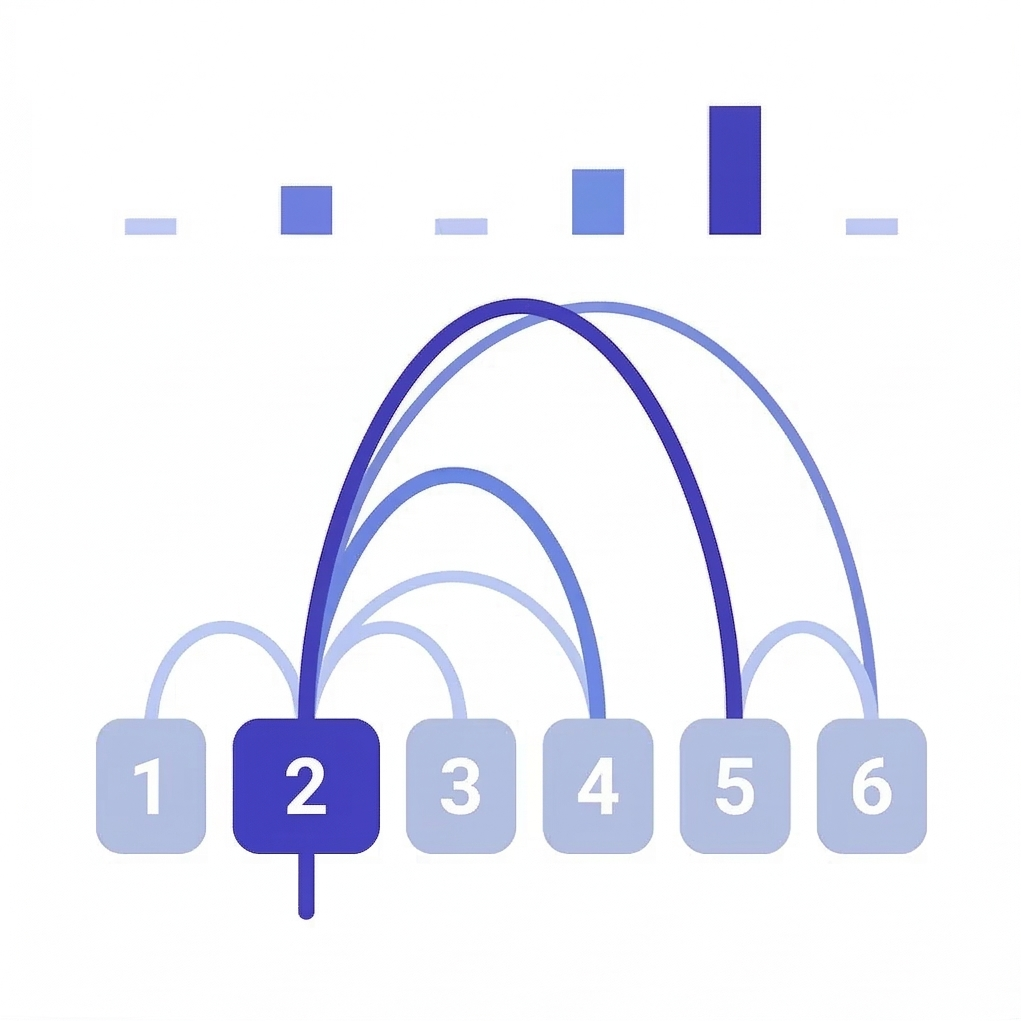
关系智能是理解和建模复杂系统中多层次关系结构的科学范式,涵盖以下四个层次:
Token-level
Token-level
语义空间中的符号关联与知识表征
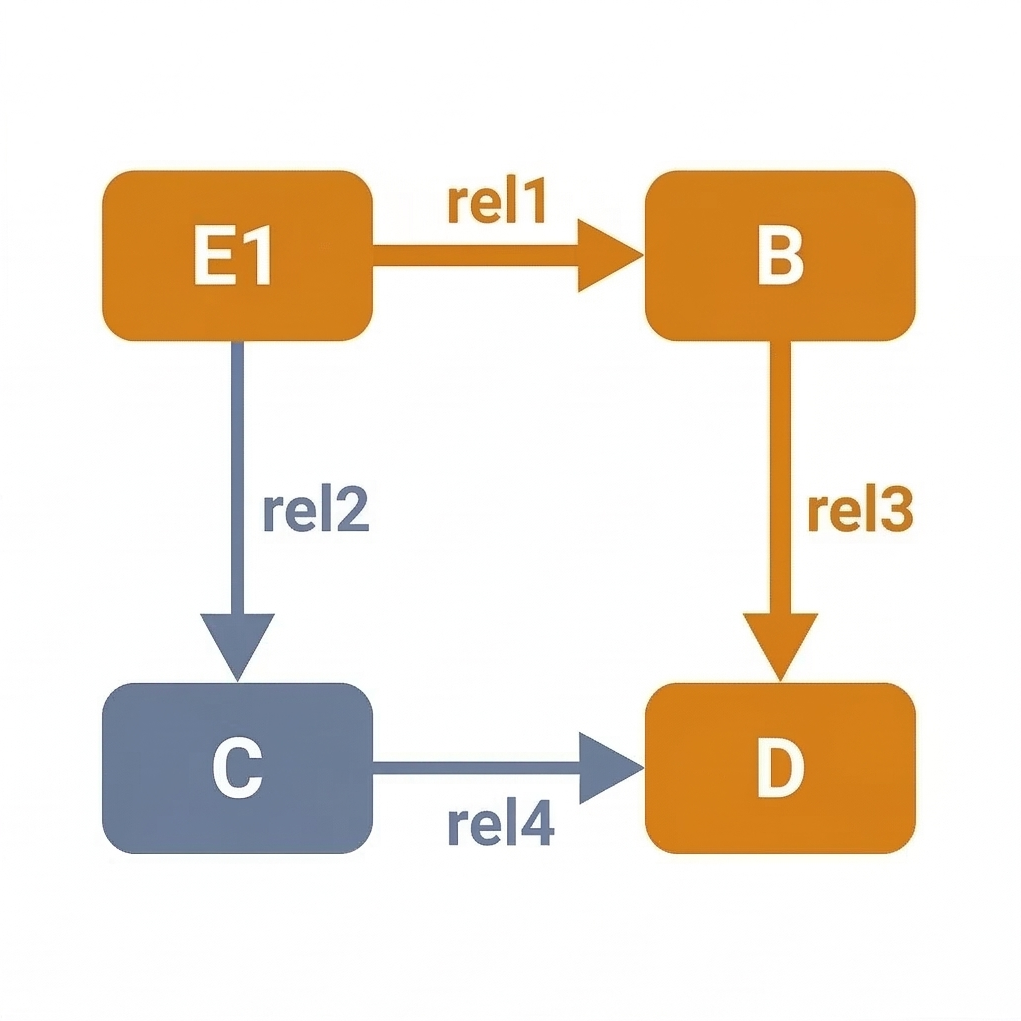
Entity-level
Entity-level
知识图谱中的实体关联与推理机制
Node-level
Node-level
图网络中的节点交互与传播动力学
Agent-level
Agent-level
多智能体系统中的协作与博弈行为

📂 研究项目

1. 知识增强的语言模型

  • 组织:智能体记忆(Agent Memory)
  • 检索:检索增强(RAG)
  • 微调:知识编辑(Knowledge Editing)
  • 对齐:模型个性化(Personalization)

2. 拓扑感知的数据模型

  • 建模:拓扑数据合成(Data Generation)
  • 预测:图表征学习(Representation Learning)
  • 仿真:多智能体交互(Multi-agent Collaboration)
  • 计算:关系基础模型(Foundation Model)

📢 加入我们

我们鼓励自由探索,致力于做有影响力的研究——既追求顶会顶刊的学术发表,也关注技术在真实产业中的价值闭环。

  • 算力资源:实验室配备 30 张以上 A800 GPU,可稳定支撑大模型相关的科研任务
  • 产业合作:与腾讯、阿里、蚂蚁、快手等企业的核心算法部门保持长期合作,研究课题贴近真实业务需求
  • 集群支持:可使用合作企业的大规模计算集群,支持大参数模型从预训练到后训练的全流程研究
  • 科研指导:提供从选题、实验到论文写作的系统性指导,支持学生逐步成长为独立研究者

🎓 欢迎有意科研实习、攻读硕士、攻读博士(与陈跃国教授合作指导/中关村学院联培)的同学联系!


🔥 News

  • 2026.07: 入选北京市“高创计划”青年人才托举工程
  • 2026.05: 入选中国人工智能学会第二届“清源学者”
  • 2026.04: 获批腾讯犀牛鸟专项研究计划项目
  • 2025.11: 获批CIPS-智谱大模型基金(中国中文信息学会)
  • 2025.11: 获批CAAI-蚂蚁科研基金(中国人工智能学会,AGI专项)
  • 2025.09: 获北京市“数据要素X”大赛数据先锋奖
  • 2025.08: 获批国家自然科学基金青年科学基金项目(C类)
  • 2024.08: 正式加入中国人民大学信息学院,担任讲师
  • 2024.06: 取得清华大学工学博士学位🎉

📝 Publications (Selected)
KDD 2026
sym

Test-Time Search for Automated GFM Fine-Tuning

Wenji Hu, Xianan Wang, Chunyu Wei, Senhao Liu, Kuien Liu, Yunhai Wang, Yueguo Chen.

SIGKDD Conference on Knowledge Discovery and Data Mining (KDD), 2026. (CCF-A)
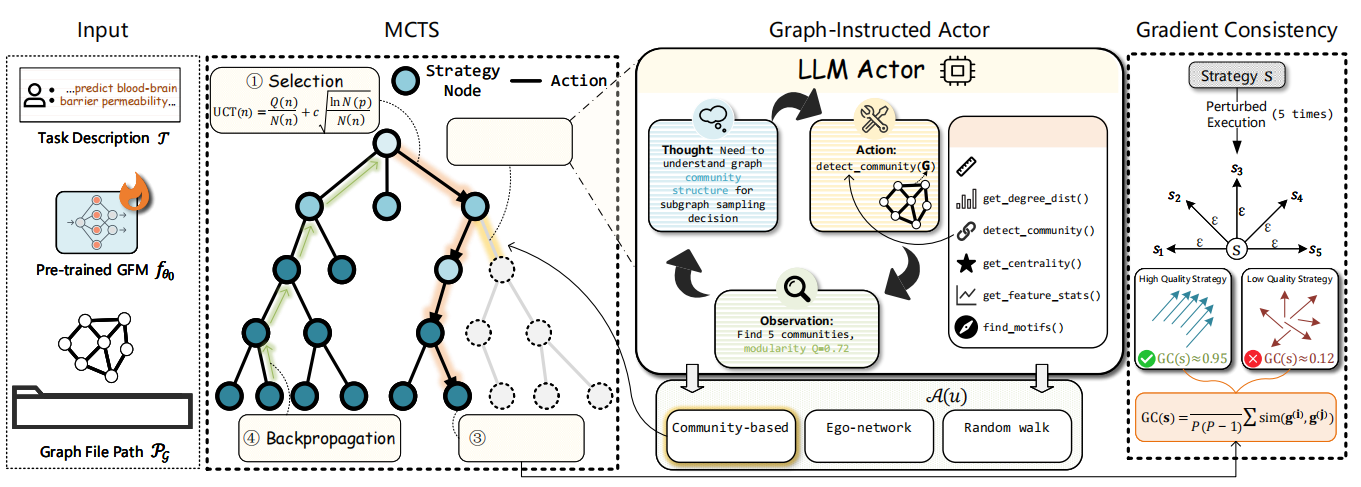
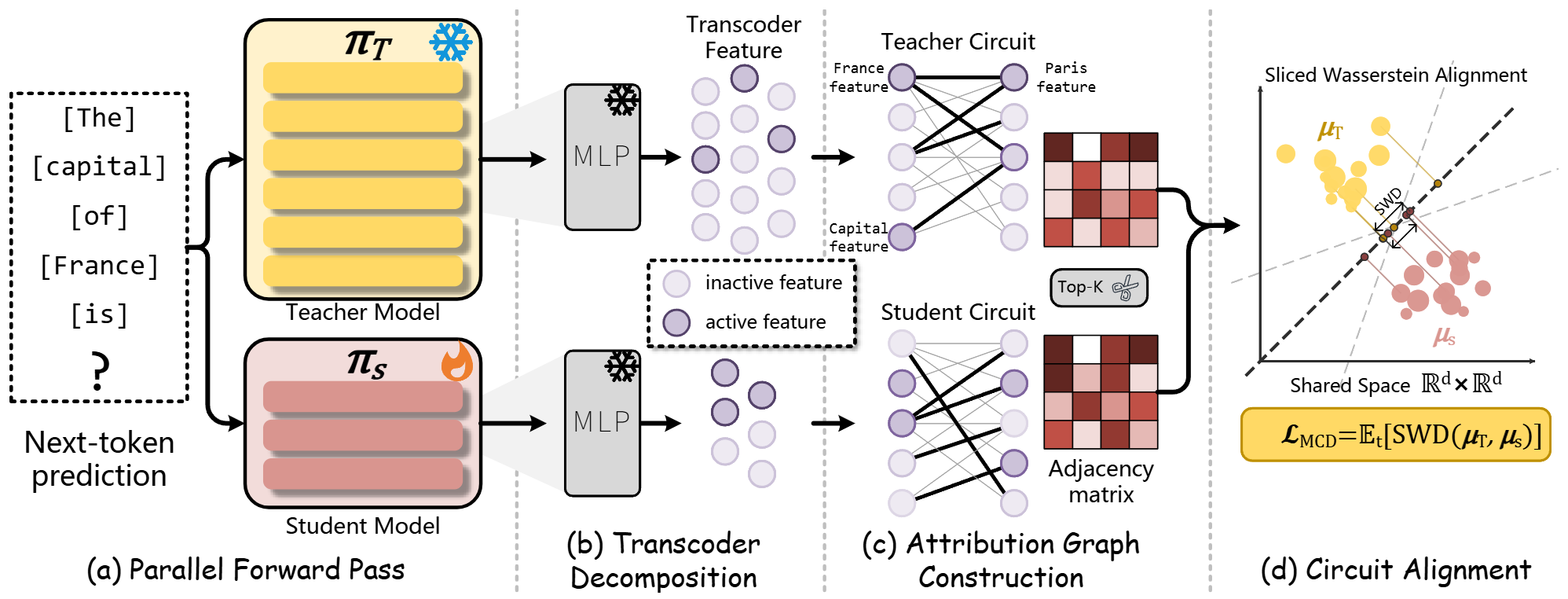
Graph Foundation Models (GFMs) have emerged as a powerful paradigm for learning transferable graph representations, yet adapting them to downstream tasks requires navigating an exponentially large decision space, traditionally demanding heavy expert effort. We propose GFMTuner, a framework that automates GFM fine-tuning by combining Large Language Model (LLM) agents with Monte Carlo Tree Search. GFMTuner accepts natural language task descriptions and generates effective fine-tuning strategies through test-time search. We introduce the Graph-Instructed Actor, which equips the LLM with graph analysis tools to ground action generation in structural insights, and Gradient Consistency, a self-supervised reward that measures gradient alignment across perturbed executions for efficient strategy evaluation. Experiments across diverse graph domains demonstrate that GFMTuner matches or exceeds human expert designs while reducing effort from weeks to a single natural language query.
ICML 2026
sym

Ramba: Selective State-Space Models for Relational Deep Learning

Yiming Liu, Chunyu Wei, Haozhe Lin, Fengjun Xiao, Junqi Zhang, Yunhai Wang, Yueguo Chen.

International Conference on Machine Learning (ICML), 2026. (CCF-A)
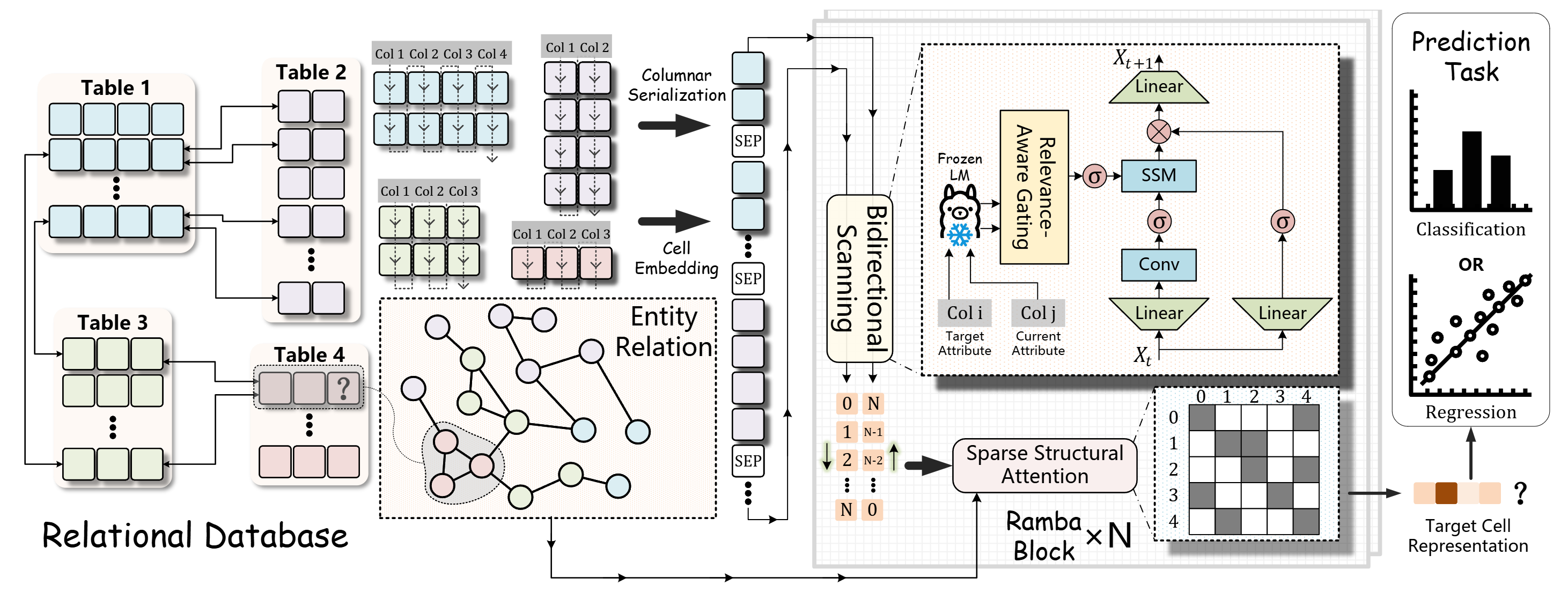
Relational Deep Learning aims to learn directly on multi-table databases, yet current methods face a fundamental tension: Transformers' quadratic complexity prohibits the large contexts that relational data demands, while GNNs sacrifice global context for efficiency. We introduce Ramba, the first selective state-space model for relational databases. Our approach features two key innovations: (1) Topology-Aware Linearization, which processes cells via global columnar serialization in linear complexity while recovering relational structure through sparse entity and foreign-key attention masks; and (2) Schema Dynamic Gating, which modulates SSM state transitions based on semantic alignment between the currently scanned attribute and the prediction target, enabling cross-table relevance filtering without relying on value distributions. Together, these mechanisms allow Ramba to ingest vast relational contexts while selectively retaining semantically relevant information. Experiments demonstrate state-of-the-art performance with linear scalability across diverse relational benchmarks.
IJCAI 2026
sym

Geodesic Expert Routing for Unbiased Knowledge Distillation in Recommendation

Xuan Zhang, Rongchuan Wei, Chunyu Wei, Hongxing Yuan, Yushun Fan.

International Joint Conference on Artificial Intelligence (IJCAI), 2026. (CAAI-A)
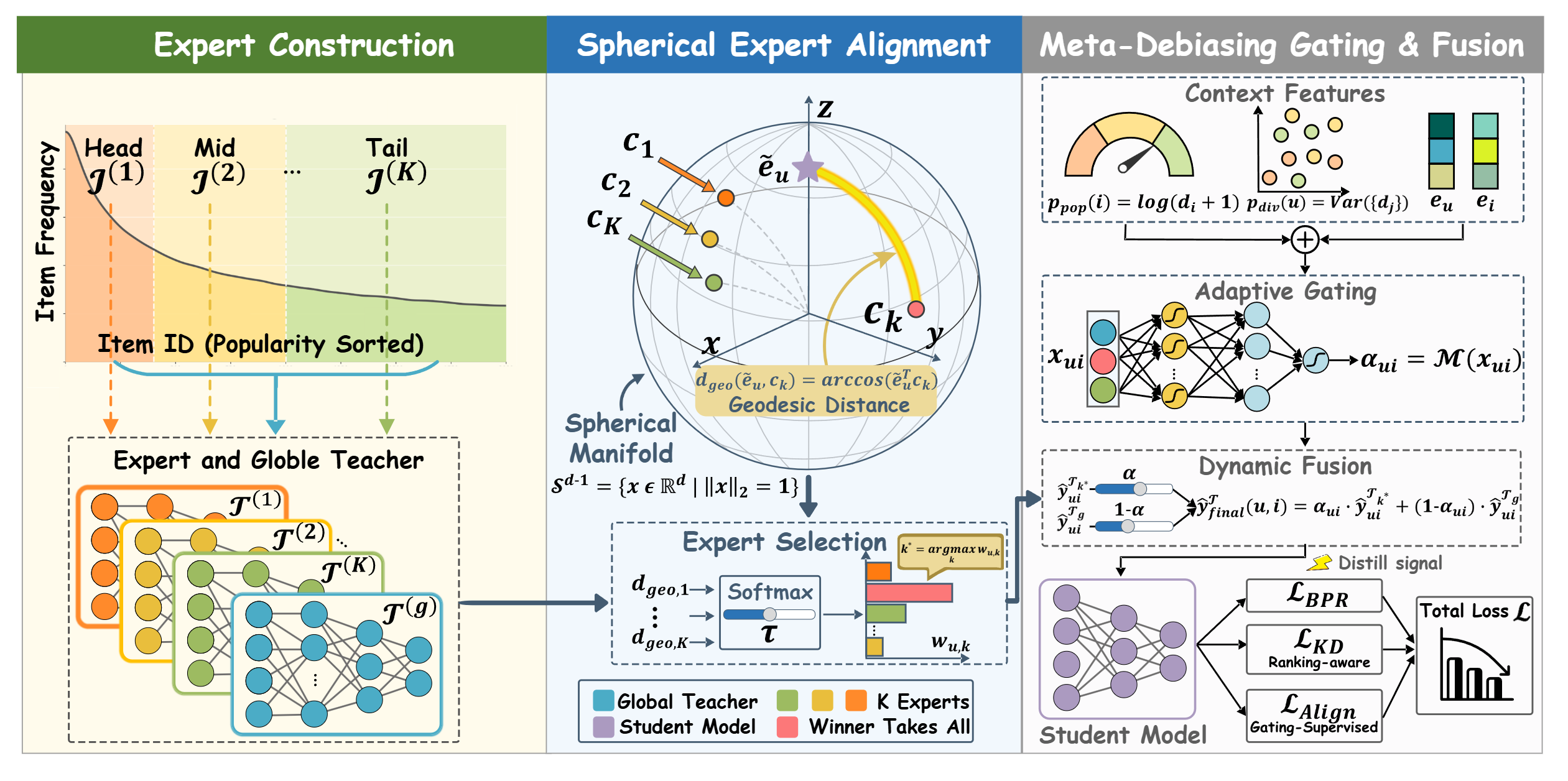
Knowledge distillation has become a prevalent technique for deploying efficient recommender systems, enabling lightweight student models to approximate the performance of larger teachers. However, we identify a critical issue: distillation systematically amplifies popularity bias, as student models inherit and intensify the popularity-driven shortcuts encoded in teachers trained on interaction data dominated by popular items. To address this limitation, we propose GUIDE (Geodesic aware Unbiased Instructive Distillation with Experts), a collaborative distillation framework that incorporates domain-specific debiasing experts alongside the global teacher. GUIDE tackles two key challenges in this paradigm. First, for expert routing, we introduce Spherical Expert Alignment, which conducts expert-student matching on the spherical manifold with geodesic distance optimization, eliminating magnitude-induced bias and ensuring stable gradient flow. Second, for context fusion, a Meta-Debiasing Gate is designed to dynamically arbitrate teacher-expert influence using real-time context via end-to-end amortized meta-learning. Extensive experiments on multiple real-world datasets demonstrate that GUIDE significantly mitigates popularity bias while preserving recommendation accuracy, with state-of-the-art trade-offs among efficiency, accuracy, and fairness.
ACL 2026
sym

Don’t Click That: Teaching Web Agents to Resist Deceptive Interfaces

Yilin Zhang, Yingkai Hua, Chunyu Wei, Xin Wang, Yueguo Chen.

Annual Meeting of the Association for Computational Linguistics (ACL), Main,2026. (CCF-A)
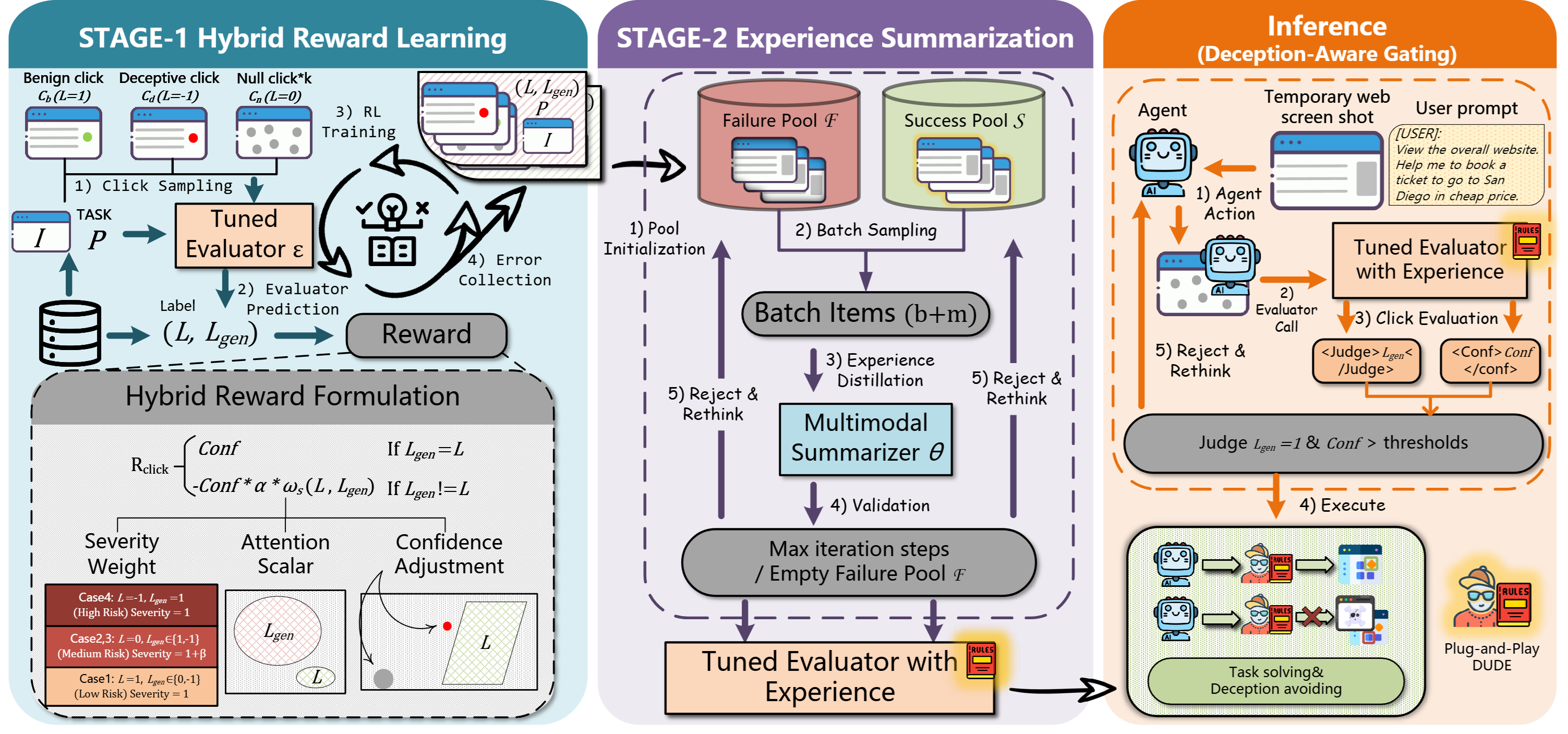
Vision-language model (VLM) based web agents demonstrate impressive autonomous GUI interaction but remain vulnerable to deceptive interface elements. Existing approaches either detect deception without task integration or document attacks without proposing defenses. We formalize deception-aware web agent defense and propose DUDE (Deceptive UI Detector & Evaluator), a two-stage framework combining hybrid-reward learning with asymmetric penalties and experience summarization to distill failure patterns into transferable guidance. We introduce RUC (Real UI Clickboxes), a benchmark of 1,407 scenarios spanning four domains and deception categories. Experiments show DUDE reduces deception susceptibility by 53.8% while maintaining task performance, establishing an effective foundation for robust web agent deployment.
ICLR 2026
sym

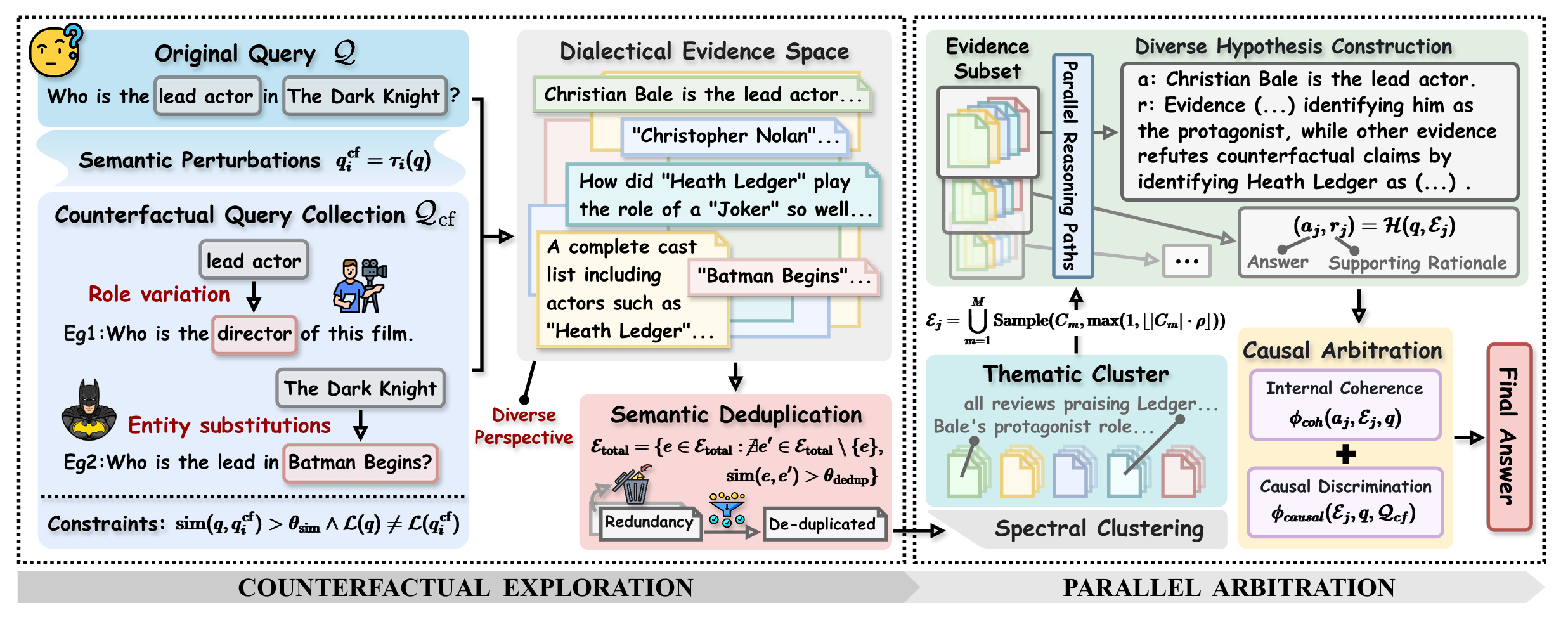
Counterfactual Reasoning for Retrieval-Augmented Generation

Huaiyu Qin, Chunyu Wei, Yueguo Chen, Yunhai Wang

The International Conference on Learning Representations (ICLR), 2026. (CCF-A)
While Retrieval-Augmented Generation (RAG) has advanced knowledge-intensive tasks, we identify a fundamental vulnerability: the Correlation Trap. Existing systems cannot distinguish causally decisive evidence from overwhelmingly correlated yet misleading information, leading to systematic failures. We introduce Counterfactual RAG (CF-RAG), a new framework that operationalizes causal reasoning to overcome this limitation. CF-RAG systematically generates and evaluates counterfactual queries to identify causally relevant distinctions, and employs a parallel arbitration mechanism to reconcile conflicting evidence without interference. On challenging benchmarks, CF-RAG substantially improves robustness against the Correlation Trap, achieving state-of-the-art performance while maintaining comparable efficiency to standard RAG models.
KDD 2026
sym

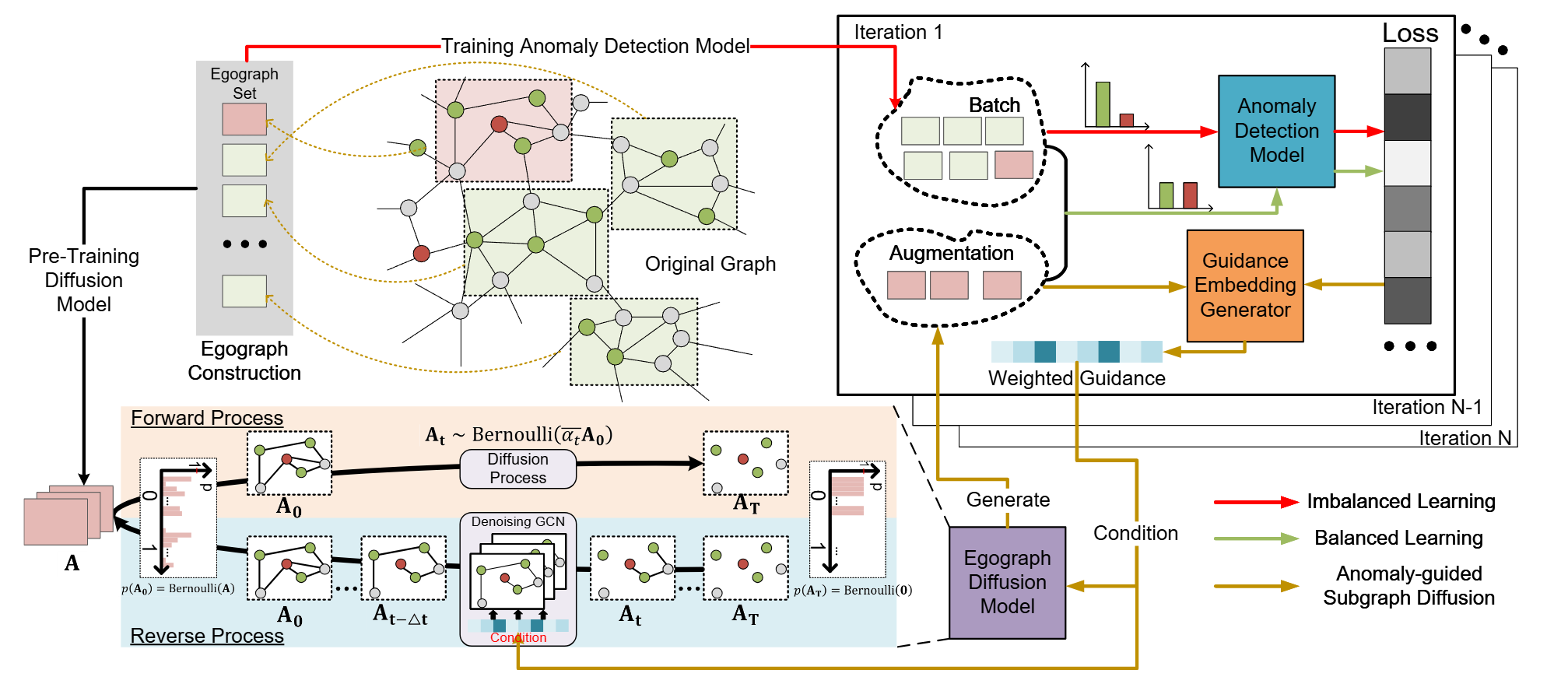
Balanced Anomaly-guided Ego-graph Diffusion Model for Inductive Graph Anomaly Detection

Chunyu Wei, Siyuan He, Yu Wang, Yueguo Chen, Yunhai Wang, Bing Bai, Yidong Zhang, Yong Xie, Shunming Zhang, Fei Wang.

SIGKDD Conference on Knowledge Discovery and Data Mining (KDD), 2026. (CCF-A)
Graph anomaly detection (GAD) is crucial in applications like fraud detection and cybersecurity. Despite recent advancements using graph neural networks (GNNs), two major challenges persist. At the model level, most methods adopt a transductive learning paradigm, which assumes static graph structures, making them unsuitable for dynamic, evolving networks. At the data level, the extreme class imbalance, where anomalous nodes are rare, leads to biased models that fail to generalize to unseen anomalies. These challenges are interdependent: static transductive frameworks limit effective data augmentation, while imbalance exacerbates model distortion in inductive learning settings. To address these challenges, we propose a novel data-centric framework that integrates dynamic graph modeling with balanced anomaly synthesis. Our framework features: (1) a discrete ego-graph diffusion model, which captures the local topology of anomalies to generate ego-graphs aligned with anomalous structural distribution, and (2) a curriculum anomaly augmentation mechanism, which dynamically adjusts synthetic data generation during training, focusing on underrepresented anomaly patterns to improve detection and generalization. Experiments on five datasets demonstrate the effectiveness of our framework.
TSC 2026
sym

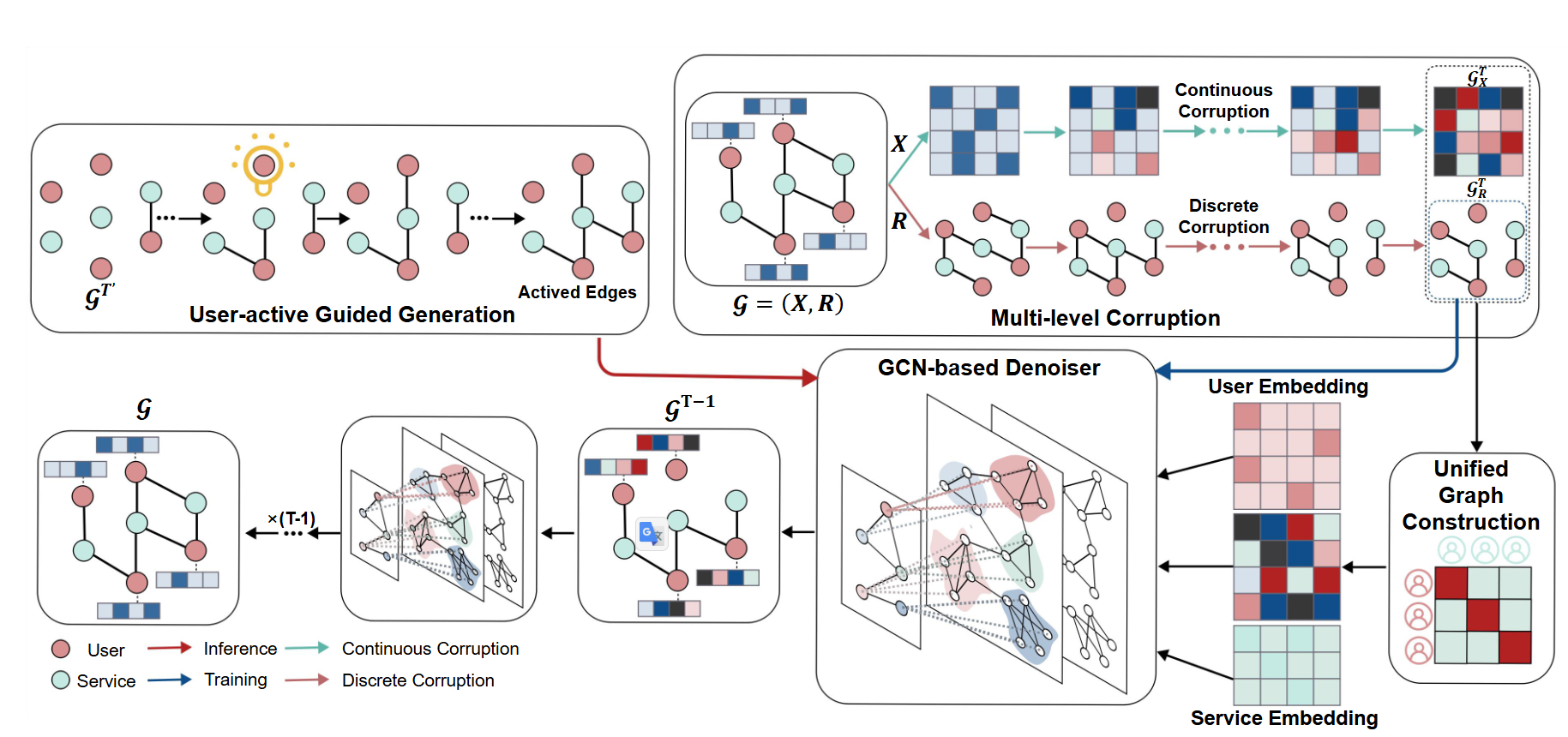
Graph-based Diffusion Model for Service Recommendation

Xuan Zhang, Xiang Deng, Hongxing Yuan, Chunyu Wei, Yushun Fan, Jia Zhang.

IEEE Transactions on Services Computing (TSC) (CCF-A)
With the widespread adoption of cloud-based services and Service-Oriented Computing, efficient service recommendation has become pivotal for optimizing service discovery and composition in large-scale ecosystems. While recent diffusion-based recommendation methods have achieved impressive results, existing approaches predominantly treat user-service interactions as isolated events, overlooking the potential of higher-order collaborative signals. To address this limitation, we propose a Graph-based Diffusion Model for Service Recommendation (GDMSR). We introduce a multi-level noise corruption mechanism that integrates both continuous and discrete noise to address noise heterogeneity, and a user-active guided diffusion process that selectively focuses on high-value edges and active users to mitigate relation explosion. Extensive experiments on six real-world service datasets demonstrate that GDMSR consistently outperforms state-of-the-art methods, highlighting its effectiveness in capturing higher-order collaborative signals and improving service recommendation performance.
AAAI 2026
sym

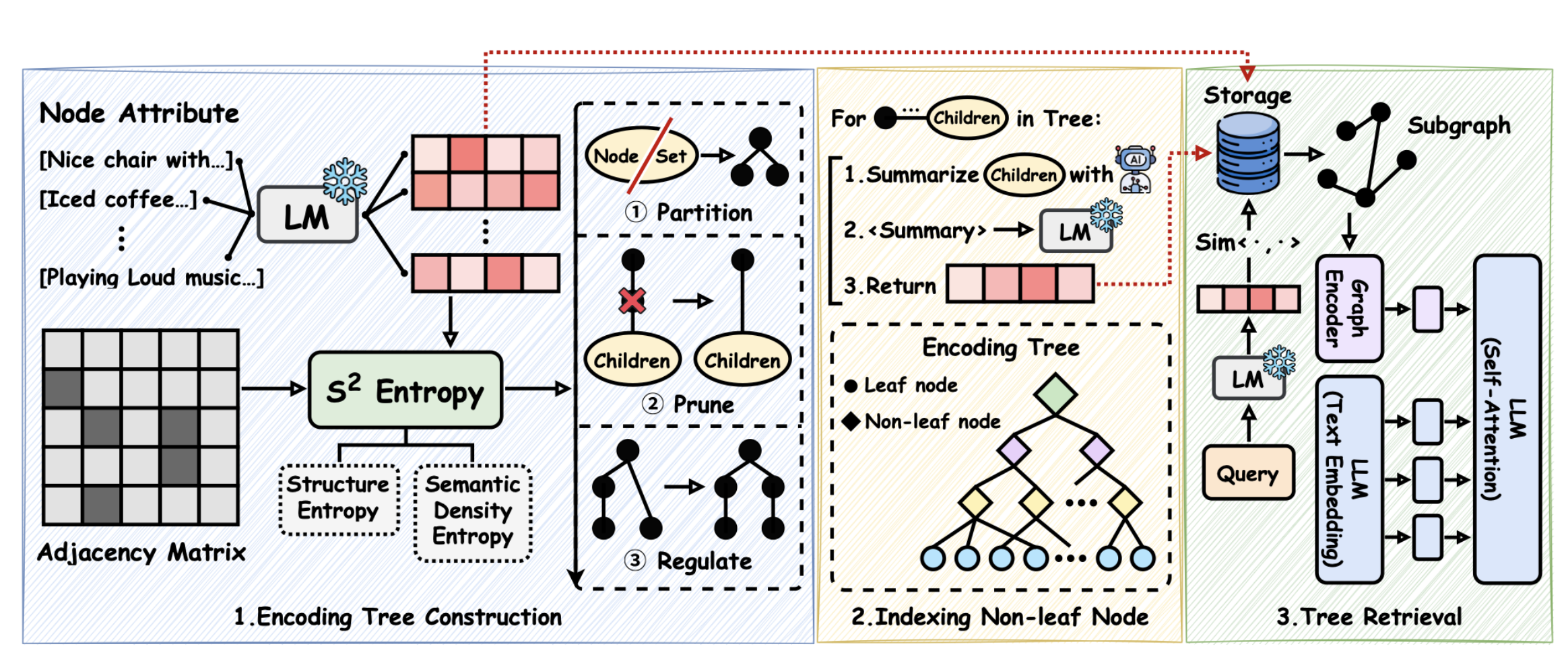
T-Retriever: Tree-based Hierarchical Retrieval Augmented Generation for Textual Graphs

Chunyu Wei, Huaiyu Qin, Siyuan He, Yunhai Wang, Yueguo Chen.

AAAI Conference on Artificial Intelligence (AAAI), 2026. (CCF-A)
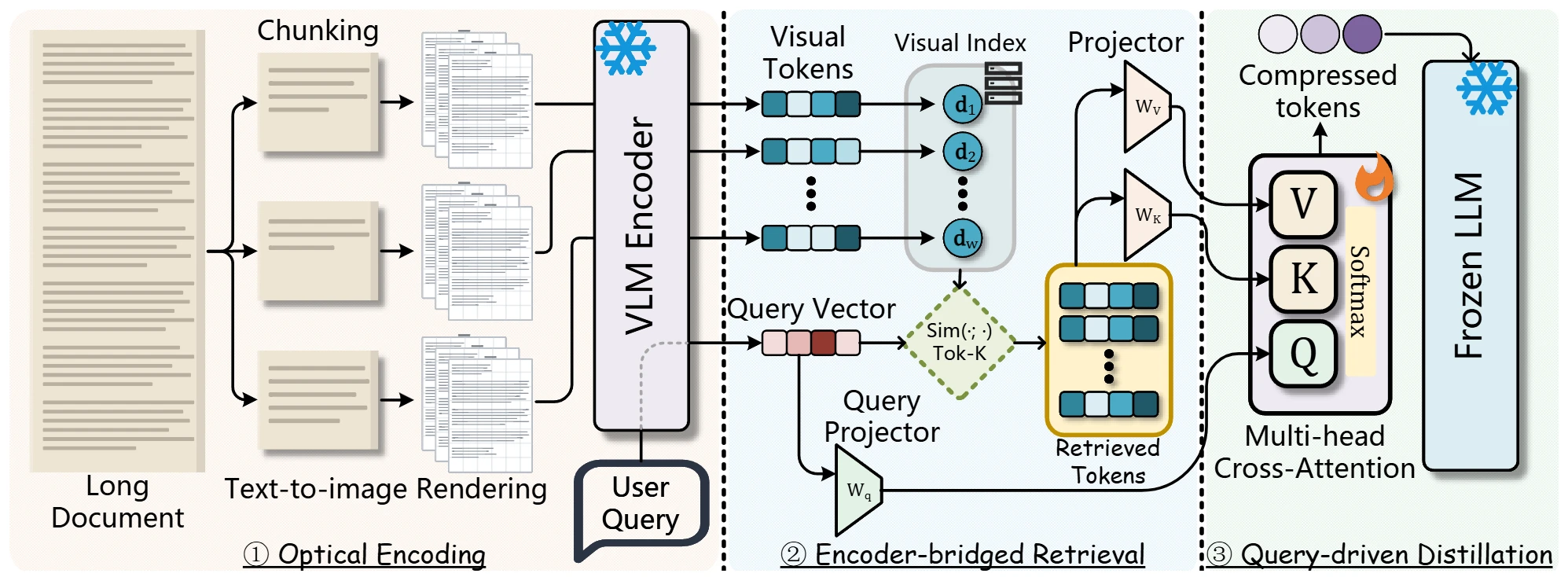
Retrieval-Augmented Generation (RAG) has significantly enhanced Large Language Models' ability to access external knowledge, yet current graph-based RAG approaches face two critical limitations in managing hierarchical information: they impose rigid layer-specific compression quotas that damage local graph structures, and they prioritize topological structure while neglecting semantic content. We introduce T-Retriever, a novel framework that reformulates attributed graph retrieval as tree-based retrieval using a semantic and structure-guided encoding tree. Our approach features two key innovations: (1) Adaptive Compression Encoding, which replaces artificial compression quotas with a global optimization strategy that preserves the graph's natural hierarchical organization, and (2) Semantic-Structural Entropy (S²-Entropy), which jointly optimizes for both structural cohesion and semantic consistency when creating hierarchical partitions. Experiments across diverse graph reasoning benchmarks demonstrate that T-Retriever significantly outperforms state-of-the-art RAG methods, providing more coherent and contextually relevant responses to complex queries.
WWW 2026
sym

Unicoon: Hypergraph-based Multi-Agent Simulation of Information Cocoons

Chunyu Wei, Yongsiqi Tu, Yunhai Wang.

THE ACM Web Conference (WWW), 2026. (CCF-A)
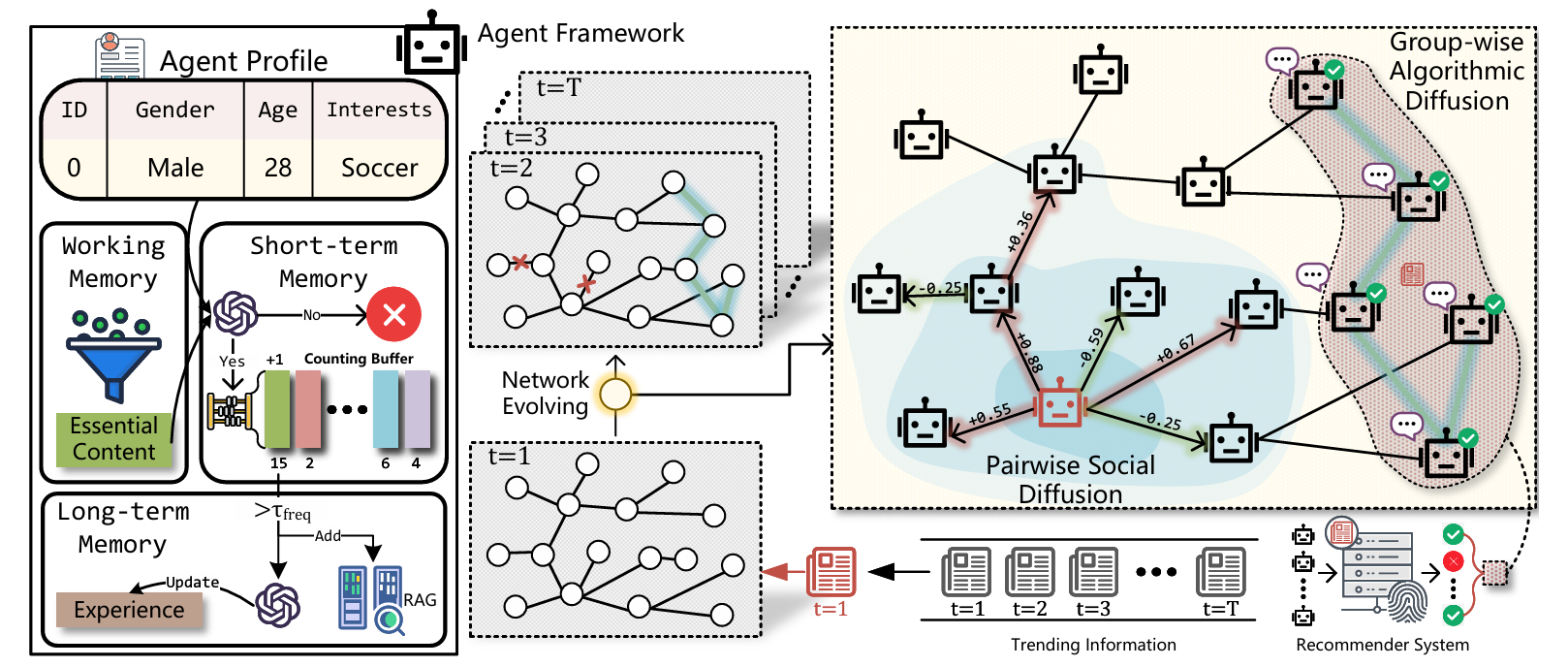
Information cocoons pose significant challenges to democratic discourse and social cohesion. While extensive research has examined how social networks and recommender systems independently contribute to this phenomenon, their coevolving dynamics remain unexplored. We present Unicoon, the first unified computational framework that simultaneously models both social network propagation and algorithmic content delivery using LLM-based multi-agent simulation. Our key innovation lies in a hypergraph formulation where agents constitute nodes, social relationships form edges, and recommender-delivered content creates dynamic hyperedges, elegantly capturing heterogeneous information diffusion patterns within a single mathematical structure. Extensive experiments on synthetic and real-world networks reveal that the synergistic interplay of social and algorithmic mechanisms creates qualitatively distinct polarization patterns, with a critical finding that larger macro-structures paradoxically accelerate micro-level cohort polarization.
NeurIPS 2025
sym

GraphChain: Large Language Models for Large-scale Graph Analysis via Tool Chaining

Chunyu Wei, Wenji Hu, Xingjia Hao, Xin Wang, Yifan Yang, Yunhai Wang, Yang Tian, Yueguo Chen.

Conference on Neural Information Processing Systems (NeurIPS), 2025. (CCF-A)
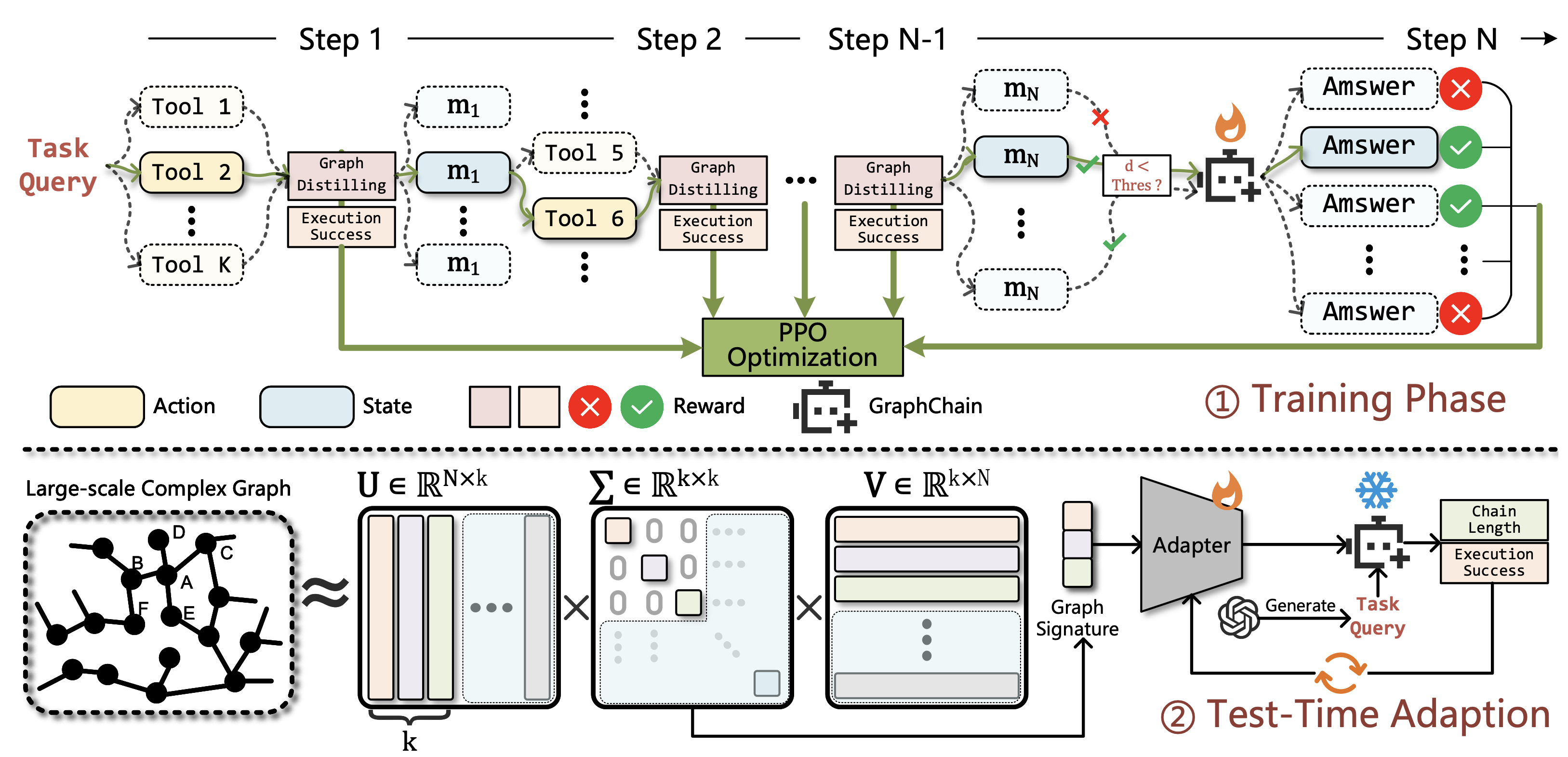
Large Language Models (LLMs) face significant limitations when applied to large-scale graphs, struggling with context constraints and inflexible reasoning. We present GraphChain, a framework that enables LLMs to analyze complex graphs through dynamic sequences of specialized tools, mimicking human exploratory intelligence. Our approach introduces two key innovations: (1) Progressive Graph Distillation, a reinforcement learning mechanism that generates optimized tool sequences balancing task relevance with information compression, and (2) Structure-aware Test-Time Adaptation, which efficiently tailors tool selection strategies to diverse graph topologies using spectral properties and lightweight adapters without costly retraining. Experiments show GraphChain significantly outperforms prior methods, enabling scalable and adaptive LLM-driven graph analysis.
NeurIPS 2025
sym

Conditional Diffusion Anomaly Modeling on Graphs

Chunyu Wei, Haozhe Lin, Yueguo Chen, Yunhai Wang.

Conference on Neural Information Processing Systems (NeurIPS), 2025. (CCF-A)
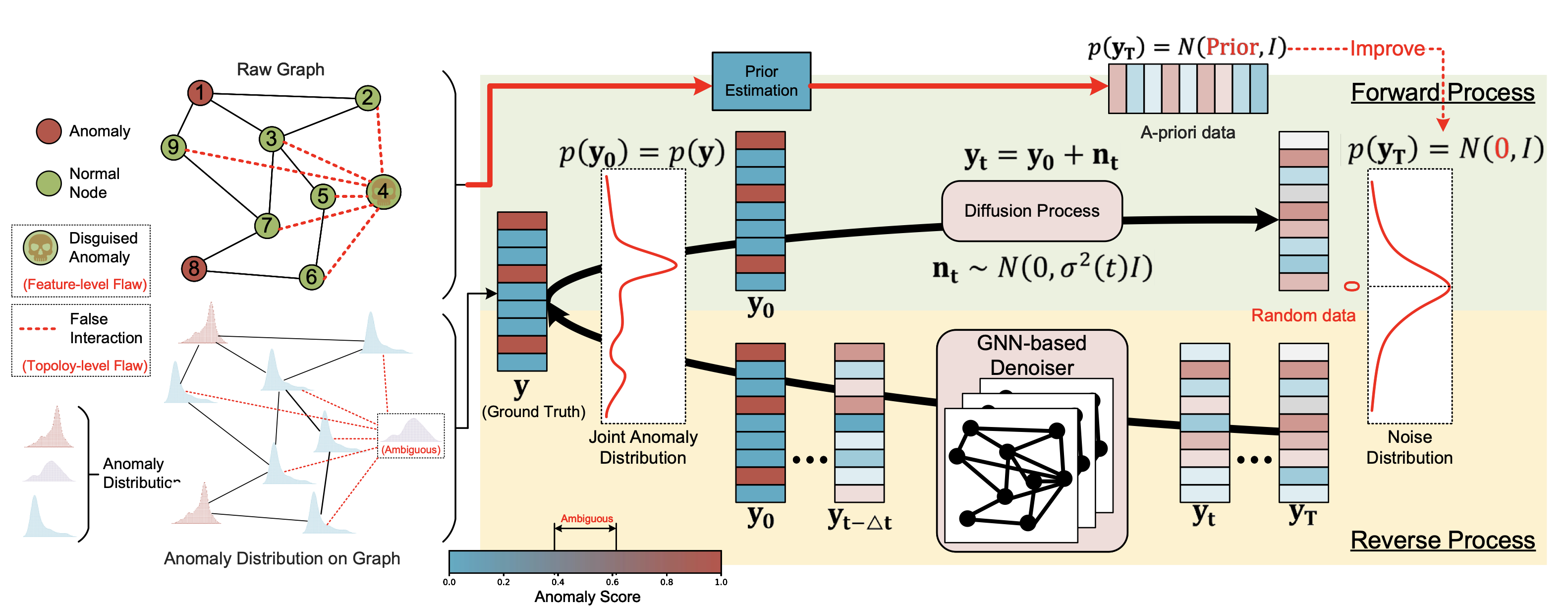
Graph anomaly detection (GAD) has become a critical research area, with successful applications in financial fraud and telecommunications. Traditional Graph Neural Networks (GNNs) face significant challenges: at the topology level, they suffer from over-smoothing that averages out anomalous signals; at the feature level, discriminative models struggle when fraudulent nodes obfuscate their features to evade detection. We propose a Conditional Graph Anomaly Diffusion Model (CGADM) that addresses these issues through the iterative refinement and denoising reconstruction properties of diffusion models. Our approach incorporates a prior-guided diffusion process that injects a pre-trained conditional anomaly estimator into both forward and reverse diffusion chains, enabling more accurate anomaly detection. For computational efficiency on large-scale graphs, we introduce a prior confidence-aware mechanism that adaptively determines the number of reverse denoising steps based on prior confidence. Experimental results demonstrate that CGADM achieves state-of-the-art performance while maintaining significant computational advantages for large-scale graph applications.
KDD 2025
sym

Graph Evidential Learning for Anomaly Detection

Chunyu Wei, Wenji Hu, Xingjia Hao, Yunhai Wang, Yueguo Chen, Bing Bai, Fei Wang.

SIGKDD Conference on Knowledge Discovery and Data Mining (KDD), 2025. (CCF-A)
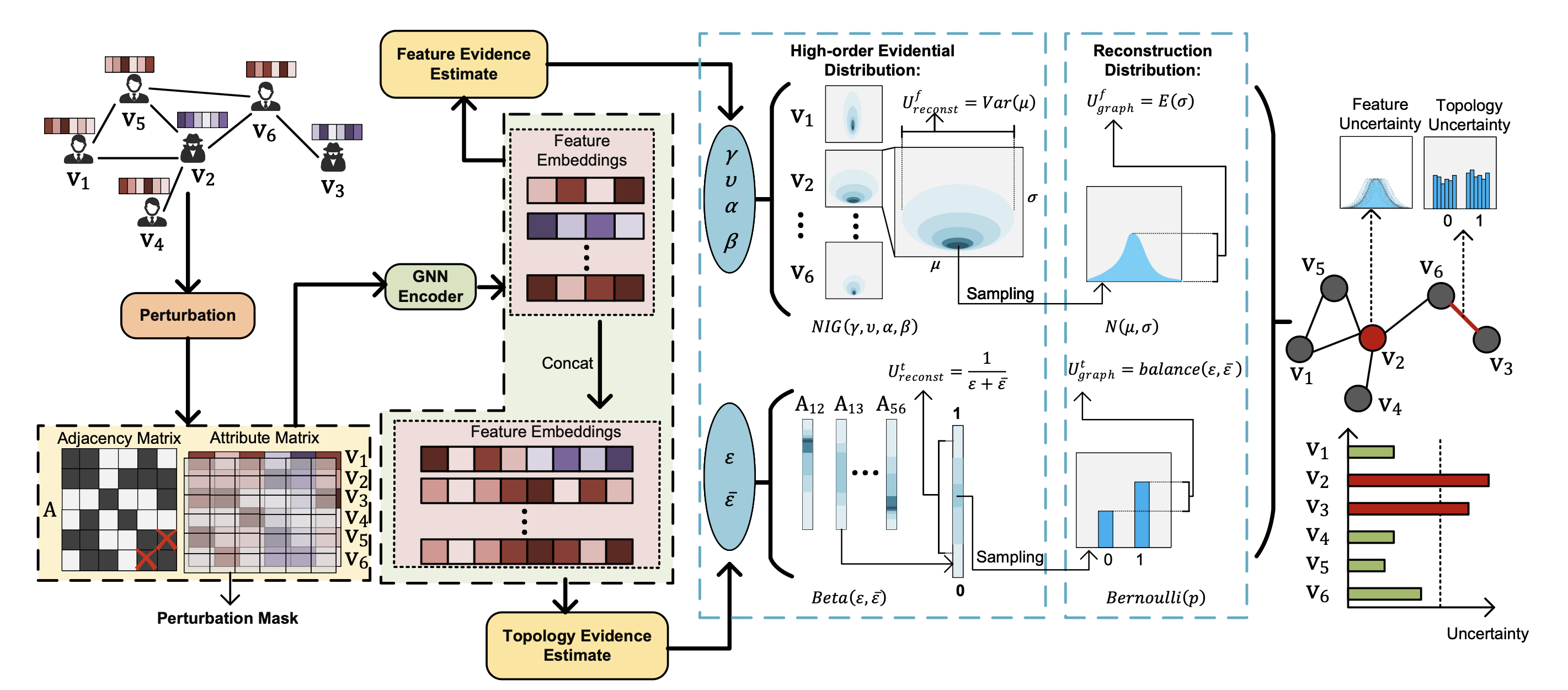
Graph anomaly detection faces significant challenges due to the scarcity of reliable anomaly-labeled datasets, driving the development of unsupervised methods. Graph autoencoders (GAEs) have emerged as a dominant approach by reconstructing graph structures and node features while deriving anomaly scores from reconstruction errors. However, relying solely on reconstruction error for anomaly detection has limitations, as it increases sensitivity to noise and overfitting. To address these issues, we propose Graph Evidential Learning (GEL), a probabilistic framework that redefines the reconstruction process through evidential learning. By modeling node features and graph topology using evidential distributions, GEL quantifies two types of uncertainty: graph uncertainty and reconstruction uncertainty, incorporating them into the anomaly scoring mechanism. Extensive experiments demonstrate that GEL achieves state-of-the-art performance while maintaining high robustness against noise and structural perturbations.
TSC 2024
sym

Cross-view Graph Alignment for Mashup Recommendation

Chunyu Wei, Yushun Fan, Zhixuan Jia, Jia Zhang.

IEEE Transactions on Services Computing (TSC) (CCF-A)
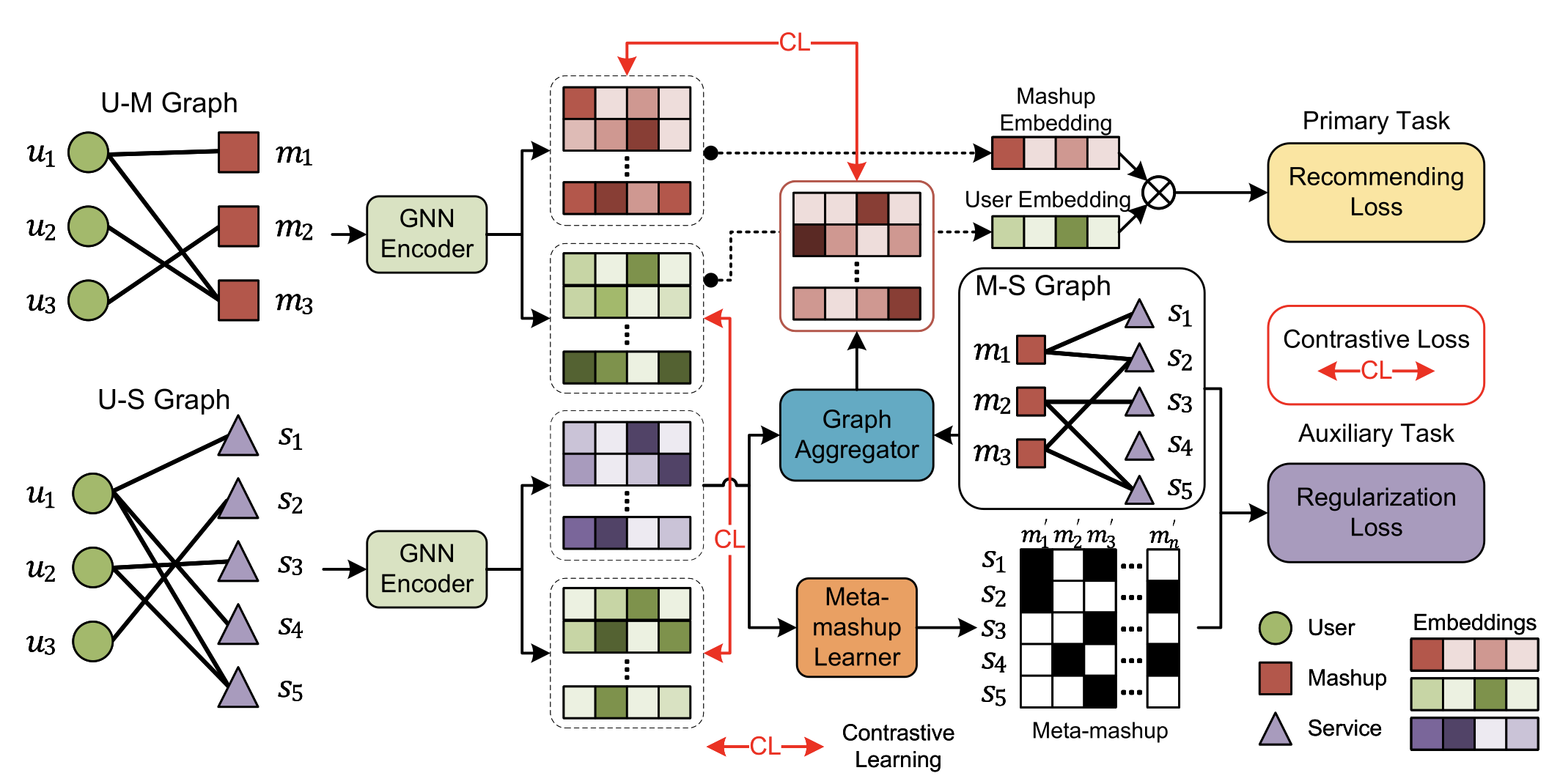
As the adoption of Service-Oriented Computing continues to grow, the number of web services has increased significantly, making service recommendation an essential tool to assist users in selecting suitable services. However, a single service cannot satisfy the complex requirements of users, which has led to the emergence of Mashup, combining services as reusable components to create value-added service compositions. On service platforms, there are many heterogeneous entities and complex relationships among them. We divide these interactions into three different views: Mashup-Invocation view, Service-Consumption view, and Mashup-Composition view. As user preferences and characteristics of services and mashups are distributed across different views, their cooperation is crucial for accurate mashup recommendation. Therefore, we propose Cross-view Graph Alignment (CGA), a framework that captures the collaborative associations dispersed across different views and enhances the representation learning of users and mashups. This is the first study to jointly tackle structure- and representation-level collaboration on the service platforms for better mashup recommendation. Experiments on two real-world service datasets show that CGA outperforms state-of-the-art methods.
CVPR 2024
sym

GigaTraj: Predicting Long-term Trajectories of Hundreds of Pedestrians in Gigapixel Complex Scenes

Haozhe Lin *, Chunyu Wei *, Li He *, Yuchen Guo, Yuchy Zhao, Shanglong Li, Lu FANG.

Conference on Computer Vision and Pattern Recognition (CVPR), 2024. (CCF-A)
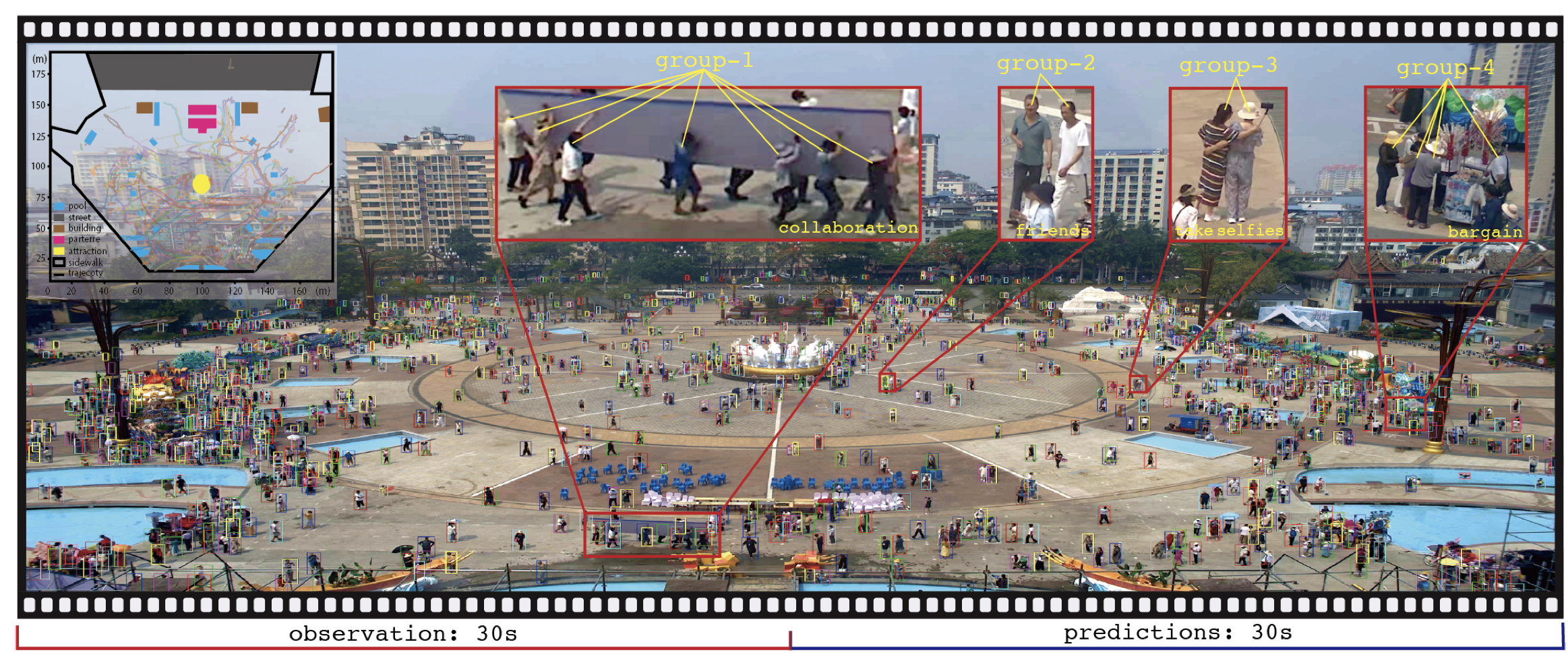
Pedestrian trajectory prediction is a well-established task with significant recent advancements. However, existing datasets are unable to fulfill the demand for studying minute-level long-term trajectory prediction, mainly due to the lack of high-resolution trajectory observation in the wide field of view (FoV). To bridge this gap, we introduce a novel dataset named GigaTraj, featuring videos capturing a wide FoV with ~4×10⁴ m² and high-resolution imagery at the gigapixel level. Furthermore, GigaTraj includes comprehensive annotations such as bounding boxes, identity associations, world coordinates, group/interaction relationships, and scene semantics. Leveraging these multimodal annotations, we evaluate and validate the state-of-the-art approaches for minute-level long-term trajectory prediction in large-scale scenes. Extensive experiments and analyses have revealed that long-term prediction for pedestrian trajectories presents numerous challenges, indicating a vital new direction for trajectory research.
KDD 2023
sym

Meta Graph Learning for Long-tail Recommendation

Chunyu Wei, Jian Liang, Di Liu, Zehui Dai, Mang Li, Fei Wang.

SIGKDD Conference on Knowledge Discovery and Data Mining (KDD), 2023. (CCF-A)
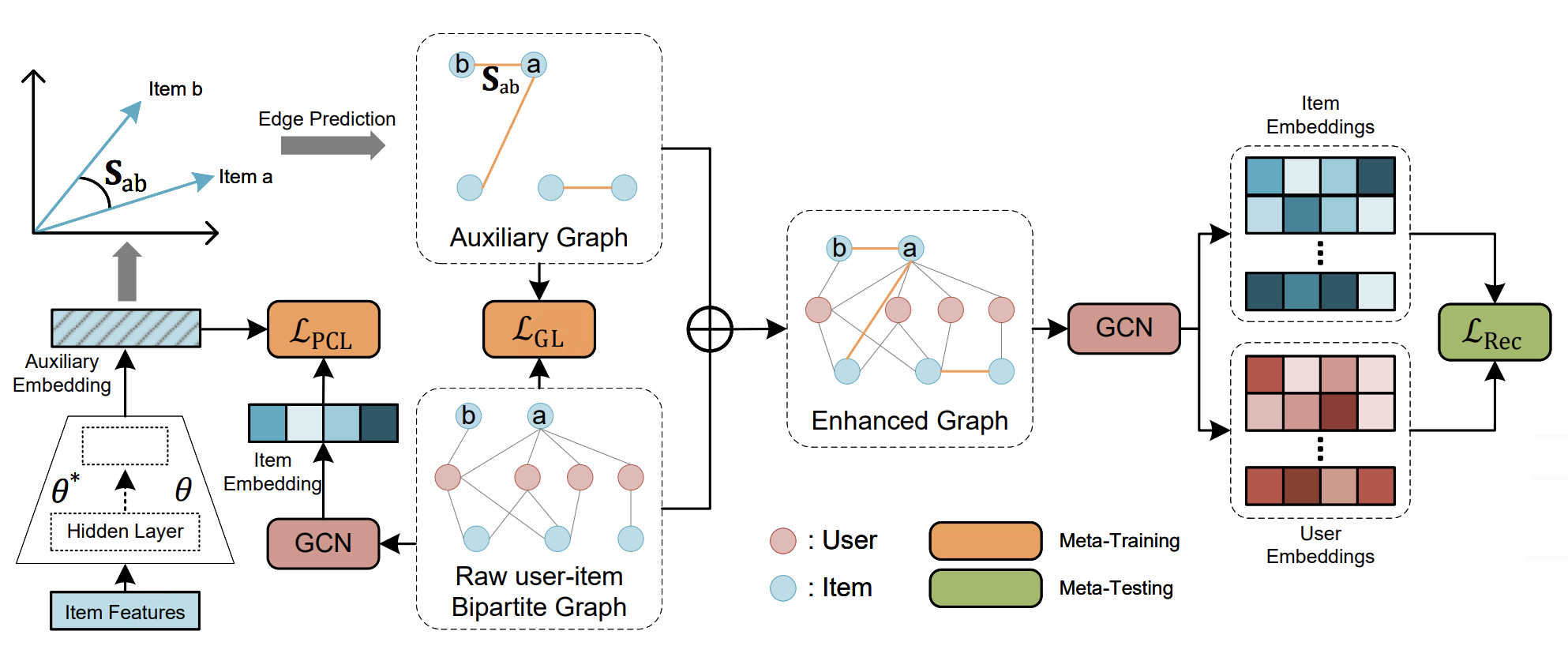
Highly skewed long-tail item distribution commonly hurts model performance on tail items in recommendation systems, especially for graph-based recommendation models. We propose a novel idea to learn relations among items as an auxiliary graph to enhance graph-based representation learning and make recommendations collectively in a coupled framework. This raises two challenges: (1) the long-tail downstream information may also bias the auxiliary graph learning, and (2) the learned auxiliary graph may cause negative transfer to the original user-item bipartite graph. We innovatively propose a novel Meta Graph Learning framework for long-tail recommendation (MGL) for solving both challenges. The meta-learning strategy is introduced to the learning of an edge generator, which is first tuned to reconstruct a debiased item co-occurrence matrix, and then virtually evaluated on generating item relations for recommendation. Moreover, we propose a popularity-aware contrastive learning strategy to prevent negative transfer by aligning confident head item representations with those of the learned auxiliary graph. Experiments on public datasets demonstrate that our proposed model significantly outperforms strong baselines for tail items without compromising the overall performance.
ICML 2023
sym

Boosting Graph Contrastive Learning via Graph Contrastive Saliency

Chunyu Wei, Yu Wang, Bing Bai, Kai Ni, David J. Brady, Lu FANG.

International Conference on Machine Learning (ICML), 2023. (CCF-A)
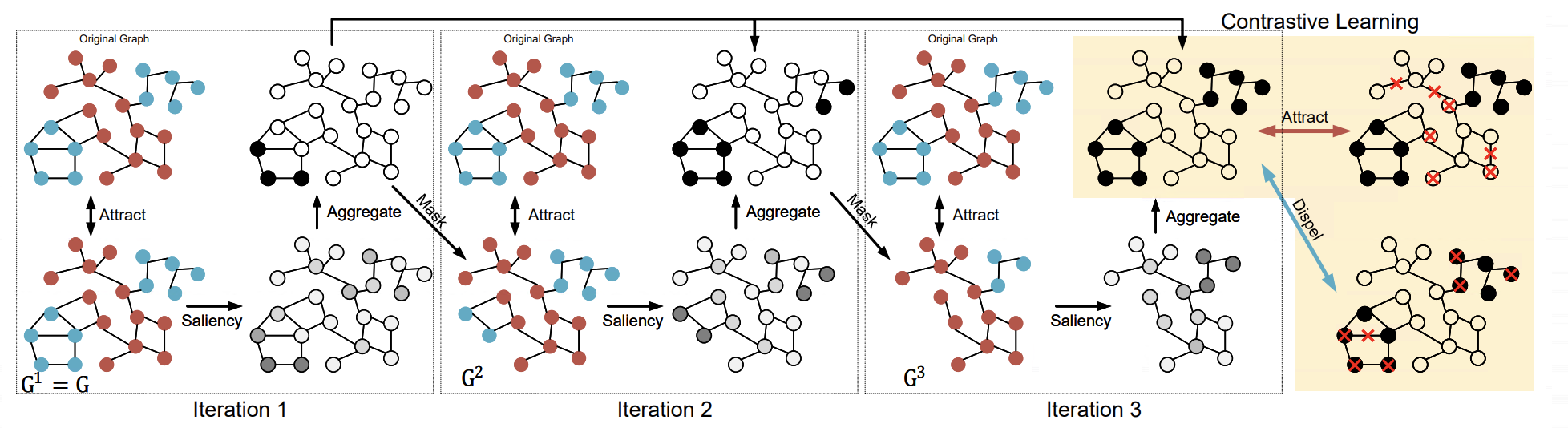
Graph augmentation plays a crucial role in achieving good generalization for contrastive graph self-supervised learning. However, mainstream Graph Contrastive Learning (GCL) often favors random graph augmentations, by relying on random node dropout or edge perturbation on graphs. Random augmentations may inevitably lead to semantic information corruption during training, and force the network to mistakenly focus on semantically irrelevant environmental background structures. To address these limitations and to improve generalization, we propose a novel self-supervised learning framework for GCL, which can adaptively screen the semantic-related substructure in graphs by capitalizing on the proposed gradient-based Graph Contrastive Saliency (GCS). The goal is to identify the most semantically discriminative structures of a graph via contrastive learning, such that we can generate semantically meaningful augmentations by leveraging saliency. Empirical evidence on 16 benchmark datasets demonstrates the exclusive merits of the GCS-based framework. We also provide rigorous theoretical justification for GCS's robustness properties.
TNSM 2023
sym

Dynamic Relation Graph Learning for Time-aware Service Recommendation

Chunyu Wei, Yushun Fan, Jia Zhang, Zhixuan Jia, Ruyu Yan.

IEEE Transactions on Network and Service Management (TSNM).

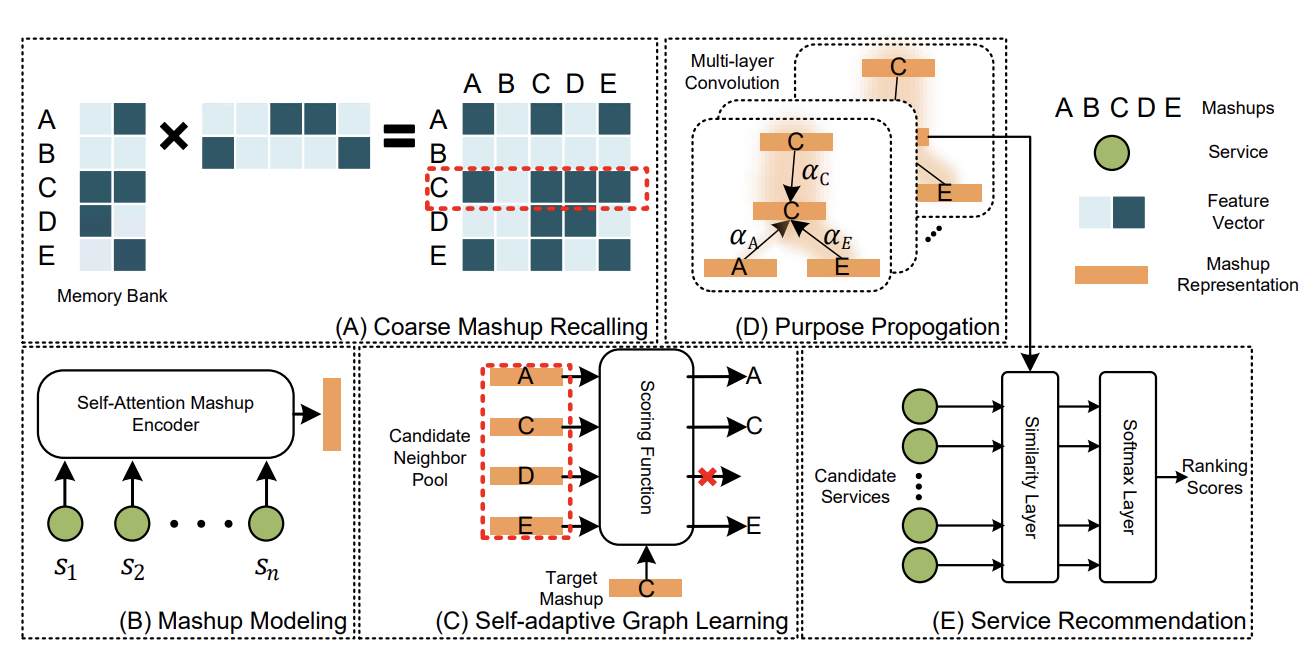
Driven by Service-Oriented Computing, time-aware service recommendation aims to support personalized mashup development, adapting to the rapid shifts of users' dynamic preferences. We propose a novel idea to learn the graph structure among historical mashups and make time-aware service recommendation for dynamic mashup creation collectively in a coupled framework. To solve both scalability and accuracy challenges simultaneously, we introduce the Dynamic Relation Graph Learning (DRGL) framework. For scalability, our framework has a coarse-to-fine recalling strategy to learn the graph structure among mashups, enabling the exploration of potential links among all historical mashups while maintaining a tractable amount of computation. For accuracy, we leverage recent advances in self-attention mechanisms and propose a transformer-based mashup encoder that considers long-range dependencies for more accurate mashup representations. Extensive experiments show that DRGL consistently outperforms state-of-the-art methods in terms of prediction accuracy for mashup creation.
NeurIPS 2022
sym

Contrastive Graph Structure Learning via Information Bottleneck for Recommendation

Spotlight (<5%)

Chunyu Wei, Jian Liang, Di Liu, Fei Wang.

Conference on Neural Information Processing Systems (NeurIPS), 2022. (CCF-A)
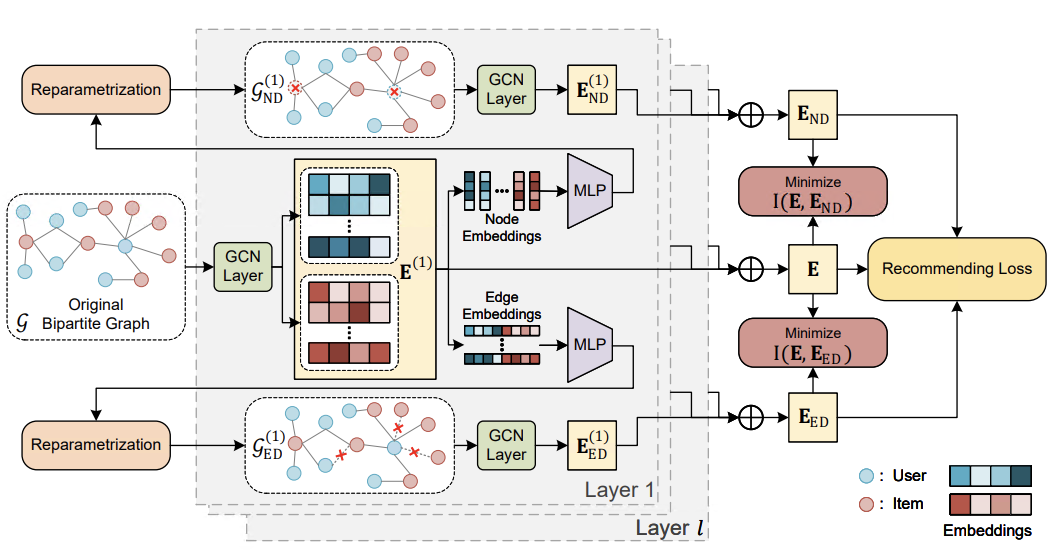
Graph convolution networks (GCNs) for recommendations have emerged as an important research topic due to their ability to exploit higher-order neighbors. Despite their success, most of them suffer from popularity bias brought by a small number of active users and popular items, while real-world user-item bipartite graphs contain many noisy interactions that may hamper the sensitive GCNs. Graph contrastive learning shows promising performance for solving the above challenges. We propose Contrastive Graph Structure Learning via Information Bottleneck (CGI) for recommendation, which adaptively learns whether to drop an edge or node to obtain optimized graph structures in an end-to-end manner. Moreover, we innovatively introduce the Information Bottleneck into the contrastive learning process to avoid capturing irrelevant information among different views and help enrich the final representation for recommendation. Extensive experiments on public datasets show that our model significantly outperforms strong baselines.
WWW 2022
sym

GSL4Rec: Session-based Recommendations with Collective Graph Structure Learning and Next Interaction Prediction

Chunyu Wei, Bing Bai, Kun Bai, Fei Wang.

International World Wide Web Conference (WWW), 2022. (CCF-A)
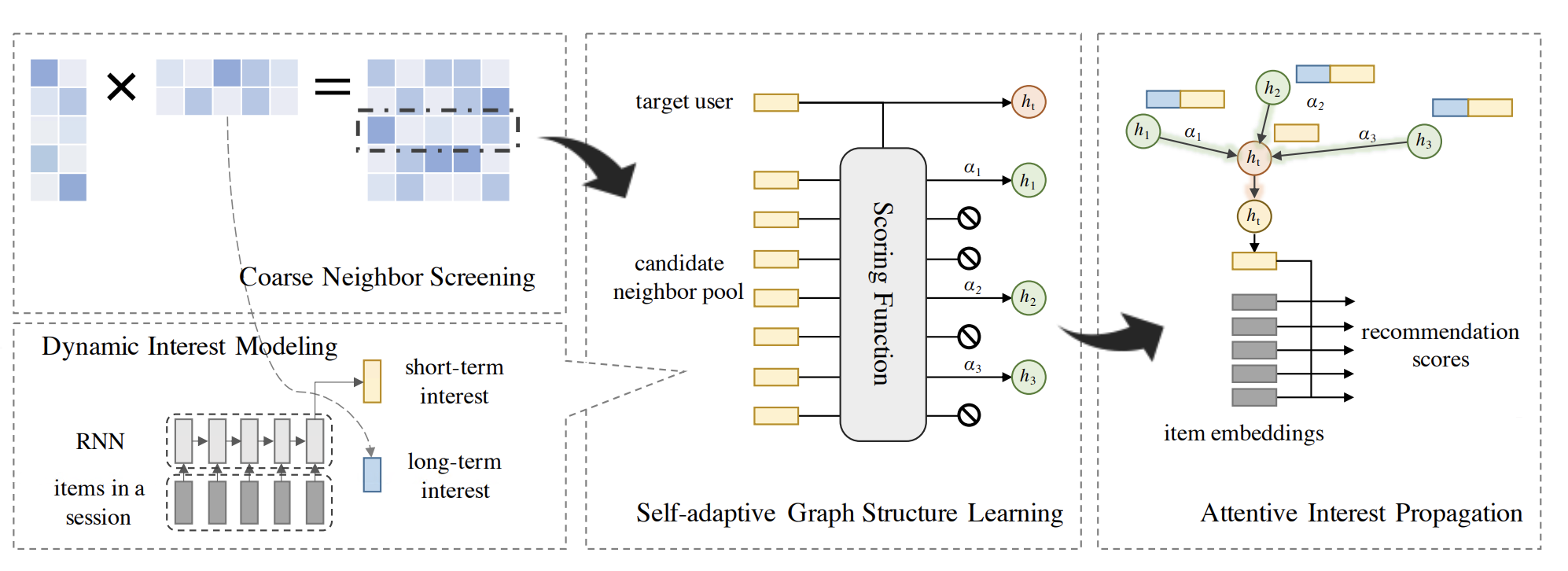
Users' social connections have recently shown significant benefits to session-based recommendations, and graph neural networks have demonstrated great success in learning the pattern of information flow among users. However, the current paradigm presumes a given social network, which is not necessarily consistent with fast-evolving shared interests and is expensive to collect. We propose a novel idea to learn the graph structure among users and make recommendations collectively in a coupled framework. We introduce a novel graph-structure learning framework for session-based recommendations (GSL4Rec) with a two-stage strategy, i.e., coarse neighbor screening and self-adaptive graph structure learning, to enable the exploration of potential links among all users while maintaining a tractable amount of computation. We also propose a phased heuristic learning strategy to sequentially and synergistically train the graph learning part and recommendation part of GSL4Rec. Experiments on five public datasets demonstrate that our proposed model significantly outperforms strong baselines, including state-of-the-art social network-based methods.
CIKM 2022
sym

Dynamic Hypergraph Learning for Collaborative Filtering

Chunyu Wei, Jian Liang, Bing Bai, Di Liu.

International Conference on Information and Knowledge Management (CIKM), 2022. (CCF-B)
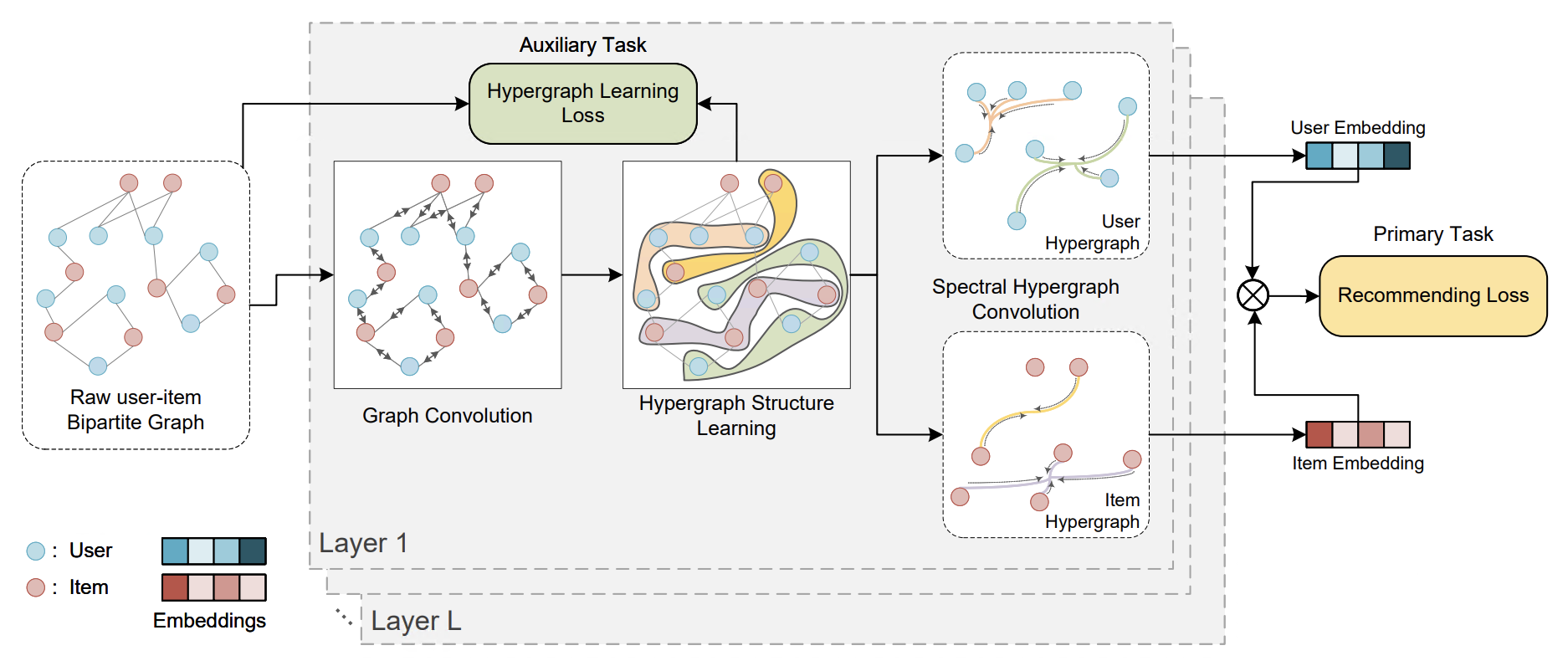
Hypergraph-based collaborative filtering for recommendations has emerged as an important research topic due to its ability to model complex relations among users and items. However, most existing methods typically construct hypergraph structures using heuristics based on existing graphs. From a learning perspective, we argue that the fixed heuristic topology of hypergraph may become a limitation and potentially compromise recommendation performance. To tackle this issue, we propose a novel dynamic hypergraph learning framework for collaborative filtering (DHLCF), which learns hypergraph structures and makes recommendations collectively in a unified framework. We propose a differentiable hypergraph learner to adaptively learn optimized hypergraph structures dynamically for hypergraph convolutions during training, and introduce a novel hypergraph learning objective that forces the learned hypergraphs to retain the original graph topology for better regularization. Extensive experiments on public datasets from different domains show that our proposed model significantly outperforms strong baselines.
TSC 2022
sym

Time-aware Service Recommendation with Social-powered Graph Hierarchical Attention Network

Chunyu Wei, Yushun Fan, Jia Zhang.

IEEE Transactions on Services Computing (TSC) (CCF-A)
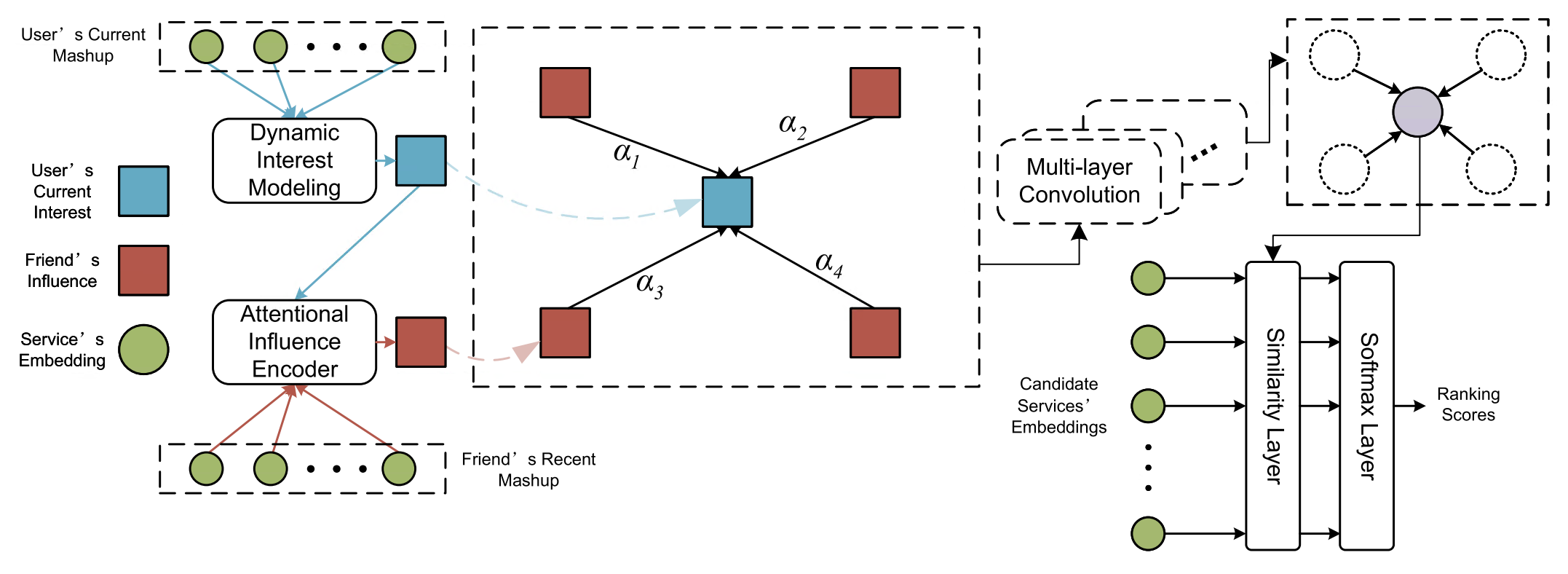
Driven by Service-Oriented Computing techniques, time-aware service recommendation aims to support personalized mashup development, adapting to the rapid shifts of users' dynamic preferences. This paper proposes a Social-powered Graph Hierarchical Attention Network (SGHAN), a deep learning model capable of learning similar behaviors from proper friends during mashup development. SGHAN is powered by the reciprocity between its two core components: a service-level attentional encoder captures users' interested services in friends' mashups, while a friend-level graph attention network selects informative friends and propagates the friends' social influences. Extensive experiments show that the SGHAN model consistently outperforms state-of-the-art methods in terms of prediction accuracy for mashup creation.
TNSM 2022
sym

High-order Social Graph Neural Network for Service Recommendation

Chunyu Wei, Yushun Fan, Jia Zhang.

IEEE Transactions on Network and Service Management (TSNM)

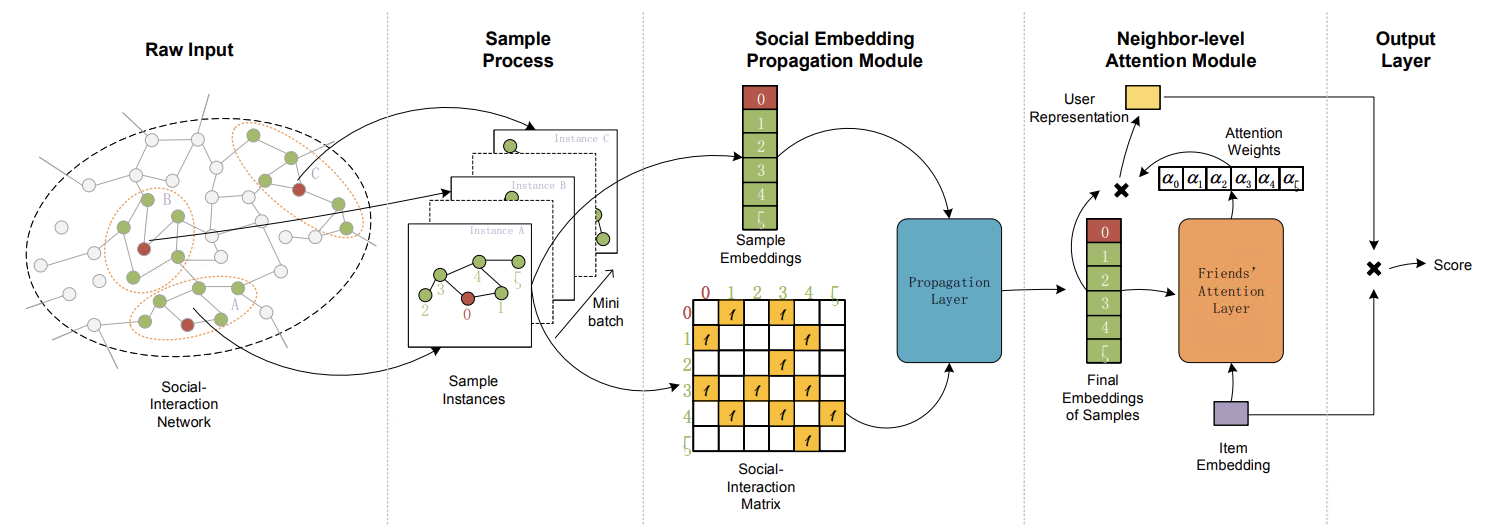
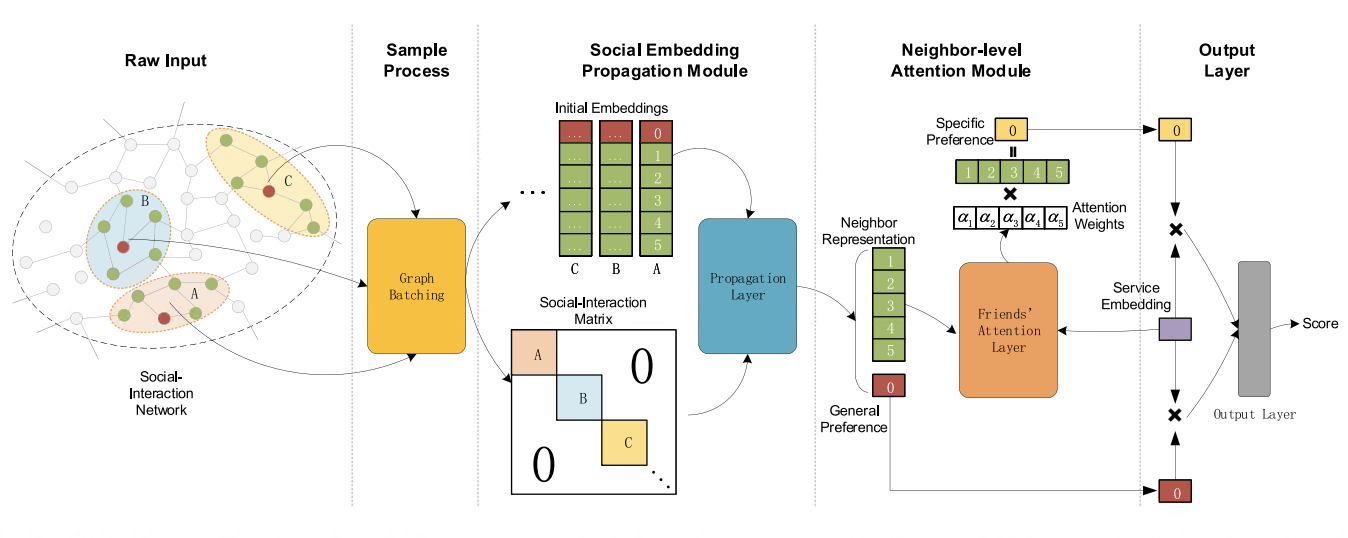
Driven by proliferation of the Service-Oriented Architecture (SOA), personalized service selection and recommendation has remained a hot topic. We study how users' high-order social networks may help improve service recommendation as well as its explainability. We introduce a novel High-order Social Graph Neural Network (HSGNN) to support social-aware service recommendation. The key idea is a graph convolution-based, multi-hop propagation module devised to extract the high-order social similarity signals from users' local social networks, and encode them into users' general representations. Afterwards, a neighbor-level attention module is constructed to adaptively select informative neighbors to model users' specific preference. Extensive experiments in a real-world service dataset show that our HSGNN makes service recommendation more accurately, by 4.71% in terms of normalized discounted cumulative gain (NDCG), than state-of-the-art baseline methods.
ICWS 2020
sym

A-HSG: Neural Attentive Service Recommendation based on High-order Social Graph

Chunyu Wei, Yushun Fan, Jia Zhang, Haozhe Lin.

IEEE International Conference on Web Services (ICWS), 2020. (CCF-B)

With the widespread application of Service-Oriented Architecture, the quantity of web services keeps increasing rapidly over the Internet. Providing personalized service recommendation to users remains an important research topic. To tackle the challenge of high-order social relations in service recommendation, we have developed a novel neural Attentive network based on High-order Social Graph (A-HSG). First, a graph convolution-based, multi-hop propagation module is devised to extract the high-order similarity signals from users' local social networks, and inject them into the users' general representations. Second, a neighbor-level attention module is constructed to adaptively select informative neighbors to model users' specific preference. Extensive experiments over a real-life service dataset show that A-HSG outperforms baseline methods in terms of prediction accuracy.

📖 Educations

2019.06 - 2024.06
清华大学,信息学院自动化系,工学博士
2015.09 - 2019.06
清华大学,信息学院自动化系,工学学士
2016.08 - 2019.06,清华大学,经济学院经济系,经济学学士(第二学位)
2017.08 - 2018.01,美国东北大学,计算机学院,计算机科学与技术(交换生)

🏆 Grants

  • 国家重点研发计划项目子课题,《面向就业结构预测的数据合成》,主持,2026年
  • 腾讯犀牛鸟专项研究计划项目,《基于扩散模型的智能代码生成与补全技术研究》,主持,2026年
  • 国家自然科学基金青年科学基金项目(C类),《面向人岗精准匹配的动态时空感知图学习方法研究》,主持,2025年
  • CAAI-蚂蚁科研基金(AGI专项),《面向Web的推理时交互的多模态UI智能体关键技术研究》,主持,2025年
  • SMP-清智大模型基金,《基于图结构约束的多智能体社会知识智能构建与涌现机制研究》,主持,2025年

💻 Research Experiences

2023.05 - 2023.11
北京快手科技有限公司, 中国
2022.07 - 2023.05
启元实验室, 中国
2021.05 - 2022.06
阿里巴巴(北京)有限公司, 中国
2020.11 - 2021.03
腾讯科技(北京)有限公司, 中国

🏅 Services

  • Reviewer of T-PAMI, TOIS, TNNLS
  • PC Member of WWW 2025